

Escape Room Waiver: Must-Have Clauses and Digital Signing Tips
Escape room waivers are essential to protect your entertainment business from legal problems that might arise during gameplay. Players who sign these documents before entering your escape rooms understand the risks and help you limit your liability as the operator.
Your interactive puzzle venue needs proper legal protection. Without it, you’re putting your business at risk. Every escape game waiver protects you like a safety net and helps you handle different problems that pop up when players get caught up in solving puzzles and escaping fictional scenarios. On top of that, escape room waivers have come a long way from bulky folders of printed documents that nobody read to efficient digital solutions that give you better protection and organization.
This piece covers everything your waiver needs to include, common legal risks you should plan for, and practical tips to set up digital signing. You’ll find out how to create a solid legal document that protects your business while keeping your customers happy.
Let’s get into what makes up an escape room waiver and why you can’t run your business without one.
What is an escape room waiver, and why it matters
Definition and purpose
Players must sign an escape room waiver before they start their adventure. This legal document creates a contractual agreement that limits or excludes your liability as an escape room operator in specific scenarios. You can call it a formal agreement between you and your players about potential risks.
These waivers serve two main goals. They help customers understand what they’re getting into and what skills they might need. The document also transfers a portion of the liability burden from your business to the person who signs it.
Legal protection isn’t the only benefit. Waivers spell out significant information about age limits, health factors, and safety rules that prevent accidents. Players get a clear picture of what to expect from their experience.
How it protects your business
A well-laid-out escape room waiver shields your company from potential issues. Your signed waiver can protect you from full liability if a player gets hurt on your property, based on local laws and circumstances.
These documents do more than just protect – they make players think about their actions. Players who sign waivers tend to be more careful because they know there are legal consequences. This happens even when the waiver might not be fully enforceable.

The waiver proves three key things:
- A player came to your venue
- They took part in an escape room
- They accepted your terms and conditions
This proof becomes valuable when dealing with credit card disputes or resolving disagreements. The courts have upheld escape room waivers in places like Kelowna, British Columbia.
Why every escape game waiver is essential
Running an escape room without a waiver puts your business at risk. A visitor’s injury lawsuit could end your business if you don’t have protection. Most escape rooms can’t survive big penalty payments since they don’t make millions in profits.
Players who sign your waiver acknowledge they’re taking on certain risks. Their signature confirms they:
- Know about the physical activity involved
- Understand you can’t predict all their actions or prevent every risk
- Take responsibility for staying safe
- Choose to participate knowing the risks
Note that waivers can’t cover everything. They won’t protect you from intentional harm, serious negligence by staff, injuries to life and health, breaking core contract obligations, or product liability issues.
Escape room waivers have become standard practice in the industry. Most venues need all players to sign one before they start, and players under 18 need a parent or guardian’s signature. This process keeps everyone safe and gives peace of mind.
Yes, it is more than just paperwork; these documents help preserve the fun while keeping proper safety standards.
Common legal risks in escape rooms
Every escape room faces legal challenges, no matter how well it runs. A properly drafted waiver protects your business, and here’s why you need to understand these risks.

Physical injuries during gameplay
Escape rooms blend physical activity with problem-solving in spaces that often have dim lighting or unusual layouts. This mix creates several risks for injuries:
Slips, trips, and falls are the most common physical hazards. Players might trip over props, slip on wet surfaces, or lose their balance in dark spaces. A college student once ignored the rules and tried to force open a prop. He slipped, cut his head on a wall-mounted item, and needed stitches.
Players often collide with objects or each other as they rush to solve puzzles. Their excitement leads to bumping into walls or props, which can cause bruises or worse injuries.
Players can get cuts and abrasions from mishandling sharp objects. Even harmless-looking props become dangerous when players don’t use them correctly.
Strains and sprains happen from physical activity in escape rooms. Simple actions like crawling, climbing, or lifting objects can hurt muscles even in safe settings. Players caught up in solving puzzles face higher risks.
Emotional distress or panic attacks
The psychological effects of escape rooms deserve attention. These immersive experiences can trigger strong emotional responses:
Anxiety and stress-related reactions show up in some players. Time pressure, confined spaces, and tough puzzles can make people breathe fast, feel dizzy, or faint. New players are more likely to react this way.
Claustrophobia creates real problems in escape rooms. The enclosed spaces make many people uncomfortable, even those who’ve never felt claustrophobic before.

Panic attacks happen rarely, but they do occur. The intensity overwhelms some players, especially in rooms with special effects or challenging scenarios. Game masters need training to spot distress signals and help quickly.
Players might take legal action under tort law if they face serious emotional distress from negligence. This makes psychological safety just as crucial as physical safety.
Property damage caused by participants
Your escape room business risks financial losses not just from player injuries but from damage they cause:
Equipment and props take the most damage. Players get excited and try to force open props they shouldn’t touch. You invest heavily in audio-visual equipment, computers, and custom puzzle elements that need protection.
Your facility might suffer structural damage, too. Players have damaged wooden steps and other building parts during excited gameplay.
Nearby property faces risks as well. One escape room lost its props, equipment, and computers to smoke damage when fire broke out next door.
Smart owners protect against these risks by:
- Setting clear rules for handling props and equipment
- Training game masters to supervise properly
- Creating solid waivers that cover property damage liability
These legal risks show why a complete waiver matters. It’s not just paperwork; it protects your escape room business when accidents happen.
What a waiver for escape rooms cannot cover
An escape room waiver provides good legal protection but won’t shield you from all liability. You need to know these limitations to run your business responsibly.
Gross negligence or intentional harm
A well-written escape room waiver can’t protect your business from liability due to grossly negligent actions. Gross negligence goes beyond simple carelessness – it shows a reckless disregard for others’ safety. Your waiver won’t help if you design clearly dangerous puzzles or if staff members chase and hurt customers with dangerous weapons.

Courts draw a clear line between normal risks that players can accept and actions that show obvious disregard for safety. They won’t enforce waivers that try to cover:
- Actions where you knew about dangers (or should have known)
- Staff members’ reckless behavior
- Intentional misconduct causing injury
Legal experts say it plainly: “A waiver will not typically exclude negligent conduct, it will definitely not shield an escape room from a lawsuit for intentional or reckless conduct”. This holds even when players sign detailed waivers.
Violation of local safety regulations
Your escape room waiver becomes useless if your facility breaks safety codes or regulations. Many operators learned this after a tragic 2019 incident in Poland, where five teenage girls died from carbon monoxide poisoning because the venue lacked proper fire safety measures.
Polish authorities ordered inspections at more than 1,000 escape room locations after this incident. This case showed how safety regulations override any signed waiver.
Safety violations that void waivers include:
- Blocked or inadequate emergency exits
- Fire code violations
- Improper electrical wiring
- Missing required permits or inspections
The International Building Code now has specific rules for escape rooms. They must meet strict requirements for fire safety features like sprinklers, fire alarms, and exit routes. Your waiver means nothing if your facility fails these standards.
Unforeseen hazards not disclosed
Escape room operators must keep their premises safe – no waiver can remove this duty. Your waiver only covers risks you clearly explain that participants can reasonably expect.
Here’s an example: Your waiver mentions uneven surfaces as a potential hazard. The waiver might protect you if someone trips over these disclosed surfaces. But it won’t help if they trip over a hidden hazard that routine inspections would have found.
Your waiver loses its power when:
- Staff don’t properly explain the contents
- Players sign under pressure or too quickly
- The language isn’t clear
- The participant is underage
Legal experts point out that many waivers try to limit negligence liability in ways that “violate the public policy of protecting individuals from businesses that prioritize profit over safety”. Courts often throw out these broad waivers.

Clear language makes a big difference. Your waiver probably won’t stand up in court if it’s unclear about what risks players accept. Vague, general waivers offer little real protection compared to those that spell out specific activities and their risks.
Your best protection comes from creating a truly safe environment and following all regulations. Think of the waiver as just one layer of protection, not a replacement for proper safety measures.
8 must-have clauses in your escape room waiver
A well-laid-out escape room waiver serves as your first defense against legal troubles. You need several critical components working together to protect your business when creating an effective waiver.
1. Assumption of risk
This foundational clause clearly states that participants understand and accept all risks that come with the escape room experience. Your waiver should outline potential dangers such as physical exertion, mental stress, enclosed spaces, and possible minor injuries.
The language must be direct: “I hereby assume all risks of participating in activities associated with this escape room event” with specific examples such as “use of simple tools,” “potentially moving objects,” and “mental stress and anxiety.” This clarity helps you avoid claims about risks not being properly disclosed.
2. Release of liability
This clause shows that participants give up their right to sue your business for ordinary negligence. Your waiver should say “I release and discharge [your company name] from any liability, claims, or demands due to negligence that may arise from my participation.”
This clause does more than just acknowledge dangers exist – it releases you from responsibility if those dangers cause harm. The release should extend to your directors, officers, employees, volunteers, and representatives.
3. Medical consent and emergency contact
This section lets medical professionals treat a participant who becomes injured or ill. Standard language includes: “I consent to receive medical treatment deemed necessary by medical professionals” and “I understand I am responsible for associated medical expenses.”

Space for emergency contact information should be included. This helps speed up response time during emergencies and shows your steadfast dedication to safety.
4. Rules acknowledgment
Participants confirm they’ve read, understood, and will follow all escape room rules in this clause. Standard wording goes like this: “I acknowledge I have read and understood the rules provided and agree to abide by them during participation.”
The waiver should state that breaking rules may lead to removal without refund. This reinforces safety guidelines and protects you against claims from participants who break rules.
5. Age and parental consent
Your waiver needs to address minimum age requirements and parental permission for minors. Most escape rooms want participants under 18 to have a parent or guardian’s signature.
The clause should read: “Participants under 18 must have a parent or legal guardian sign this waiver on their behalf.” Some venues create specific rules for younger children and require adult supervision for those under 14.
6. Photo/video release
This clause permits you to use participants’ images in promotional materials. Standard language reads: “I agree to allow my photo, video, or film likeness to be used for any legitimate purpose this authorizing entity decides.”
You should also establish your no-recording policy: “I understand that taking photographs or recording video inside escape rooms is prohibited.” This protects your intellectual property and keeps the experience fresh for future players.
7. Behavior and conduct agreement
This section describes expected behavior and what happens if someone misbehaves. Use language like: “I agree to not engage in any behavior that is dangerous, disrespectful, or disruptive” and “I understand I am financially liable for any damages caused to the property.”
This clause helps you recover costs when participants damage expensive props or equipment.
8. Signature and date
The final element needs participants to confirm they’ve read and understood everything. Effective wording states: “I certify that I have read this document, fully understand its contents, and sign it voluntarily without pressure or duress.”

Leave space for printed name, signature, and date. Digital waivers should have checkboxes for each major clause and a final e-signature to strengthen the document’s legal standing.
Note that you should consult with a lawyer who knows your local laws since requirements vary by location.
How to write a legally sound waiver
A template from the internet isn’t enough to craft an effective waiver. Your escape room waiver’s legal strength depends on how you structure and word this critical document.
Use clear and simple language
Your escape room waiver’s strength comes down to readability. Courts frequently examine whether an average person could understand the document without extra help. Complex legal terminology can actually weaken your protection.
Your waiver’s intentions should be crystal clear. Players need to understand what rights they’re giving up and what rights they keep. Courts may rule the waiver unenforceable if participants sign it without fully understanding it.

To achieve clarity:
- Replace legal jargon with everyday terms when possible
- Break complex concepts into shorter sentences
- Use context clues to help readers understand necessary legal terms
- Apply the principle “if you can use a simpler word, do it”
Your goal isn’t to confuse players but to protect your business through proper understanding and informed consent.
Avoid ambiguous terms
Ambiguity is the enemy of legal protection. Your escape game waiver won’t hold up in court if it allows multiple interpretations. Legal loopholes from vague language can destroy your entire risk management strategy.
Your waiver should list the specific activities participants will take part in and the potential risks involved. Itemized descriptions of possible hazards protect you better than general statements like “participant assumes all risks.”
Make your waiver a standalone document instead of hiding it within other paperwork. Many businesses have faced legal issues by concealing waiver clauses inside membership agreements or registration forms. Courts don’t look kindly on this practice and often invalidate waivers that aren’t visible enough.
Timing plays a crucial role. Present your escape room waiver well before the activity starts. This stops claims that participants signed “under duress” because they didn’t have time to review or felt rushed to sign.
Consult a legal professional
A carefully written waiver still needs legal review. Each jurisdiction has specific requirements affecting enforceability. A waiver that works perfectly in one state might offer little protection in another.
Team up with an attorney who knows your business model. Escape rooms have unique risks that set them apart from other entertainment venues, which requires specialized knowledge.

Legal professionals spot potential problems that others might miss. They know problematic wording that courts could interpret against you. This expertise protects your business from unnecessary liability and costly litigation.
Professional legal consultation becomes an investment, not an expense. Having a lawyer review your waiver costs nowhere near as much as defending against a single lawsuit with a weak waiver.
Your waiver needs regular updates with legal guidance as the industry grows. New court decisions and changing regulations can affect your escape room waiver’s protections.
The right legal partner will give you maximum protection while keeping your waiver valid and enforceable in your location.
Pitfalls to avoid when creating your waiver
Your escape room waiver needs more than just following a template. Business owners often fall into common traps that leave them vulnerable to legal challenges.
Overgeneralizing the risks
Many owners make their escape room waivers too broad and nonspecific. Opposing attorneys love finding waivers that try to cover everything in general terms. This approach weakens your legal position.
Generic statements like “participant assumes all possible risks” don’t protect you as much as you might think. Courts look at overly broad waivers with suspicion and might declare them unenforceable.
Your waiver should list specific activities that actually happen in your facility. To name just one example, see if players will use keys to unlock doors or solve puzzles with physical movement – these activities need explicit mention.
Note that specificity equals strength in legal documents. You might want to cast a wide net, but being precise about actual risks protects you better.
Failing to update the waiver regularly
The core team often treats waivers as “set it and forget it” documents. Legal standards change, escape room themes evolve, and new safety issues pop up, yet many owners never look at their original paperwork again.
Think about this scenario: You started your escape room with simple puzzle challenges. Later, you added rooms with crawl spaces or climbing elements. Your original waiver creates a dangerous gap in protection if it doesn’t mention these new physical demands.
Regular reviews should happen:
- After adding new rooms or scenarios
- When modifying existing puzzles
- Following any safety incident
- At least annually, even without changes
Local regulations might also change and affect what your waiver needs. Last year’s legally sound document might now have outdated language that doesn’t protect you.
Not lining up the waiver with the actual activities
The biggest problem happens when your waiver doesn’t match what actually happens inside your escape rooms. This mismatch creates serious legal risks.
If your waiver only mentions mental challenges but your room needs physical effort like crawling or climbing, you’ve created a gap that weakens your protection. The same goes for waivers describing one environment while players face something completely different.
This issue often comes up in court during litigation. Legal experts point out that opposing attorneys look specifically for gaps between the waiver’s description and what actually happened.

You can prevent this by:
- Walking through each room to spot potential incidents
- Writing down all physical and mental demands
- Updating waivers when room designs change
- Having staff verify waiver accuracy
A good waiver isn’t enough on its own. You just need proper business insurance too. The best risk management combines clear waivers, proper insurance, staff training, and regular safety checks.
Experience shows that room activities must match waiver descriptions exactly. You create a problem if safety briefings tell people not to climb furniture, but your waiver stays silent about climbing risks.
Small inconsistencies can void otherwise solid legal protection. That’s why smart escape room owners treat their waivers as living documents that grow with their business.
Digital signing tips for escape room waivers
Paper-based waivers belong in the past. Digital escape room waivers protect both owners and players better and make operations run smoothly. The right approach to electronic signing can transform your business operations.
Benefits of digital over paper waivers
Digital waivers eliminate the storage headaches that come with paper forms. Insurance companies just need you to keep waivers for 3-7 years, which creates huge storage problems with traditional methods.
Electronic systems let you:
- Find completed waivers in seconds through simple search functions
- Save each document automatically as a permanent PDF
- Learn about customer preferences through collected data
Digital waivers cost less than paper ones by cutting down on printing, ink, maintenance, and filing expenses. Most popular plans charge less than 10¢ per waiver. On top of that, it helps the environment by reducing paper waste.
Best practices for digital consent
The participant’s experience should stay simple with digital consent forms. Your waiver should stand out with a clear header like “WAIVER/RELEASE OF LIABILITY”.
Players can sign either on your tablets or their own devices using QR codes. Parents can add all but one of their children on a single form, which makes the process easier for families.

Ensuring legal validity of e-signatures
Electronic signatures carry the same legal weight as handwritten ones if they meet certain requirements. Your digital escape room waiver system must have:
- Clear intent to sign through obvious consent actions
- Evidence that participants agreed to do business electronically
- A traceable connection between the signature and the document
- Secure storage of signed records
Courts support electronic waivers that keep detailed audit trails. Each digital signature records the date, time, IP address, browser information, and device details. This information helps prove authenticity if legal questions come up.
Using both electronic and paper versions might seem smart, but you should avoid it. Paper backups after electronic signing can void both documents through legal novation.
Why online booking software is a game-changer
Today’s escape room businesses need more than digital waivers. They need complete solutions that tie their operations together.
Automated waiver collection
Online booking platforms make handling waivers a breeze. Players sign waivers before they arrive or use on-site kiosk apps. All documents stay in one central location. These signed waivers link to customer profiles and game bookings right away. Staff can spot missing paperwork at a glance.
The system sends instant notifications to staff when players complete waivers. Digital copies go straight to customers and team members. This saves hours of desk work and keeps documents from getting lost.
Improved customer experience
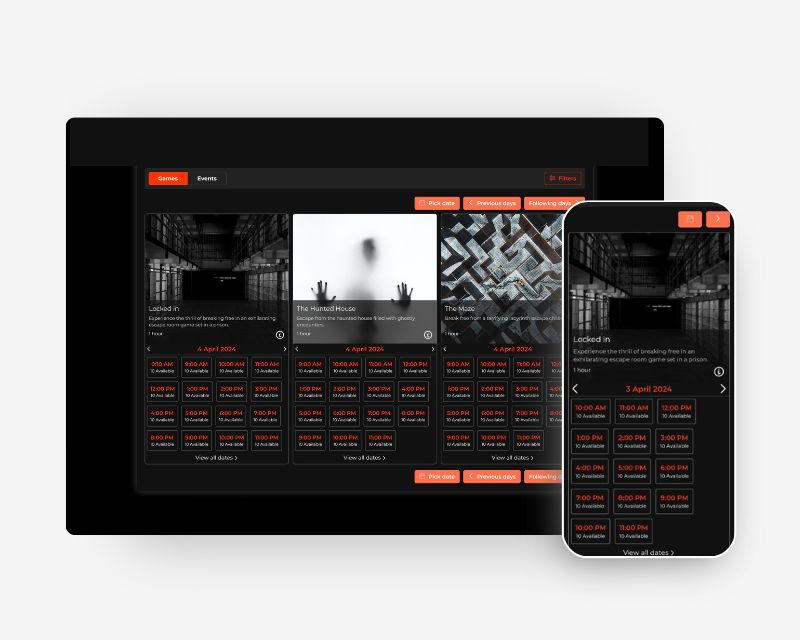
Booking software makes the pre-game process simple for players. They can book games and pay from anywhere, any time. No more printing or carrying physical waivers around.
Players can now:
- Book multiple games with one-time paperwork
- Get automatic reminders about upcoming games
- See available time slots right away
Escape rooms live and die by first impressions. A smooth pre-arrival process leads to happier players and better reviews.
Why Bookeo is the best option for escape rooms
Bookeo’s online booking software shines because it was created just for escape room operators. Its waiver system gets all player information before each game starts or during waiver collection, so you can say goodbye to paper forms.
The escape room booking platform lets you customize layouts to match your brand and fits right into your website. Players pay exactly what you charge – no extra fees or booking commissions from Bookeo.
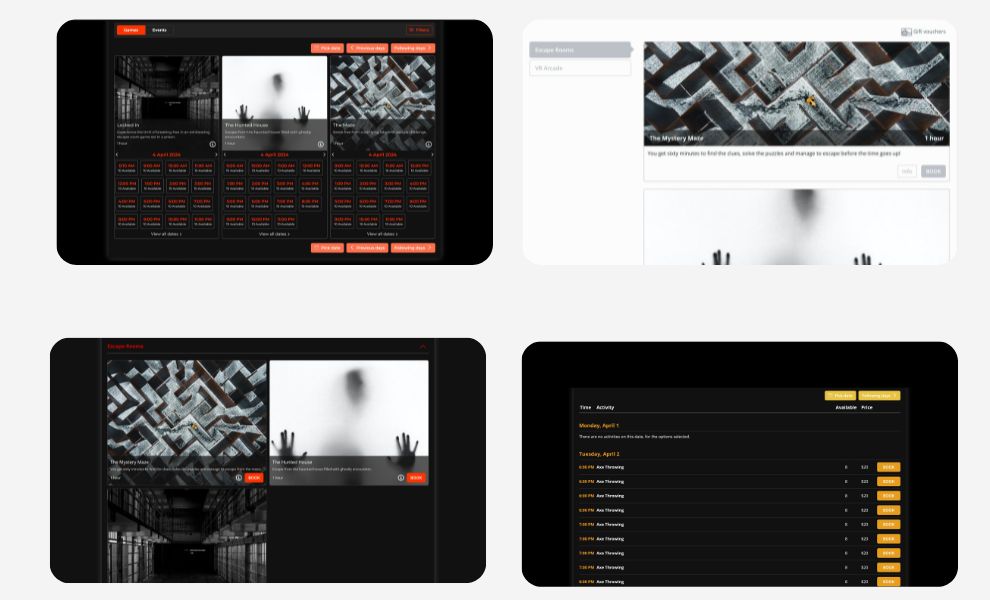
Bookeo helps thousands of businesses in over 120 countries and works in more than 35 languages. This makes it perfect for escape rooms of any size.
Conclusion
A well-crafted escape room waiver acts as your business’s legal shield in an industry full of unexpected elements. This piece has shown why these documents matter deeply; they set clear expectations, transfer appropriate liability, and provide documented proof of participant acknowledgment.
Note that your waiver can’t protect against everything. Proper safety standards and following local regulations remain crucial, along with your paperwork. Even the most carefully written document can’t replace genuine safety measures.
The eight critical clauses work together to provide complete protection. Each component, from risk assumption to behavior agreements, plays a specific role in protecting your operation. These safeguards work only when your waiver steers clear of common pitfalls like overgeneralizing risks or staying outdated as your business grows.
Digital solutions have changed waiver management from a complex process into an efficient system. Electronic signatures save time, cut costs, and strengthen legal validity through better documentation. On top of that, platforms like Bookeo boost this efficiency by linking waivers directly to your booking process.
You should review your current waiver against these guidelines. Check if it has all the work to be done. Make sure the language stays clear and specific. A legal professional familiar with your jurisdiction should look it over. Quick action now stops problems from growing later.
The time has come to upgrade to a digital system if you haven’t yet. Paperless waivers combined with booking software like Bookeo create a professional first impression while cutting down administrative work substantially. This lets you focus on what counts, creating memorable escape room experiences while keeping your business safe.