

Tour Waiver Guide: What Smart Business Owners Know
Tour waivers are your tour business’s first defense against potential lawsuits. Industry experts confirm these legal documents protect your business from negligence claims when accidents happen during tours. A well-written waiver can protect you from accidents under your control and mistakes that guests, providers, and contractors make. This applies whether you run hiking adventures, city tours, or culinary experiences.
Your business needs signed tour waivers to protect you, your clients, and your operations. Digital options have made the process easier than ever. The E-Sign Act of 2000 makes these electronic versions just as valid as paper ones. A detailed tour guide waiver also covers specific travel risks. These include trips to remote areas with limited medical access and places where infrastructure might not meet travelers’ home country standards.
Smart business owners should understand everything about tour waivers. This piece explains what makes these documents legally binding. You’ll learn about choosing between paper and digital formats and the essential elements that every effective waiver needs.
Why tour waivers are essential for your business
Tour businesses work in an environment with many factors they can’t control – participant skills, health issues, weather shifts, broken equipment, and other people’s actions. A well-written waiver protects your business from liability claims and sets clear boundaries with participants.

Protecting your business from legal claims
A tour waiver works as a release of liability where participants accept risks and agree not to hold your business responsible for injuries or damages. These documents serve two main purposes when properly created: they prevent lawsuits and protect organizations from participant actions.
Tour operators use liability waivers to transfer potential liability from their business to their clients. This matters because courts rarely see accidents as just accidents – they usually blame someone’s negligence.
A study of 44 court cases with liability waivers showed that half were decided in favor of the business. But waivers don’t make you bulletproof. Courts can throw out waivers that reach too far, break consumer laws, or involve serious negligence.

Insurance companies check your waiver first when someone makes a claim. Strong waivers help insurers take a firmer position and might reduce settlement amounts. This helps your bottom line – lower insurance payouts mean your premiums likely won’t jump as much.
Setting clear expectations with participants
Tour waivers do more than provide legal protection – they build trust with clients by spelling out risks and responsibilities. Good waivers help:
- Tell participants about specific activity risks
- Define acceptable behavior
- Show who’s responsible in different situations
- Explain what rights participants give up
People often sign waivers without reading them carefully. Yet these documents play a vital role in setting proper expectations. Listing common risks in the waiver ensures clients know what they’re getting into. This openness builds trust and makes it harder for participants to claim they didn’t know about possible dangers.
A detailed waiver shows your professionalism and dedication to safety. Clients who see you’ve thought about potential risks tend to view your business as responsible and well-run.
Reducing misunderstandings and disputes
Clear tour waivers prevent confusion about who’s responsible for what between your business and participants. This clarity helps avoid expensive disputes that might turn into legal fights.
Waivers give you a great chance to collect valuable customer data for marketing. Most businesses only get information from the lead booker, missing up to 80% of potential email addresses. Your waiver process can gather demographic details and marketing insights by asking questions like “Where did you hear about us?” This could cut your marketing costs by 20-30% while keeping growth steady.

Remember that waivers don’t remove your duty to run safe programs. They add a layer of protection as part of strong risk management, but they work alongside safety measures rather than replace them. The best approach mixes solid safety rules, proper staff training, good equipment maintenance, and complete waivers.
Talk to a lawyer who knows the tour industry rules in your area before setting up a waiver system. Legal advice costs money but costs much less than fighting legal action with a weak waiver.
What makes a tour waiver legally valid
Knowing the legal foundation of tour waivers helps build stronger protection for your business. A well-constructed waiver serves as your first line of defense against expensive lawsuits.
Understanding local laws and regulations
Tour waivers’ enforceability varies by jurisdiction. As of 2022, liability waivers were upheld in 46 states. Connecticut accepted them with reluctance, while Louisiana, Montana, and Virginia rejected them outright. These differences across locations make local requirements essential to understand.
Maryland courts ruled that liability waivers work when their language “clearly and specifically indicates the intent to release the defendant from liability for personal injury”. Virginia’s highest court, however, declared that the state’s public policy has long prohibited prospective releases of personal injury damages.
States have passed specific liability statutes that address restrictions within particular activities. The collection method matters too. A Maryland court case raised concerns about waivers only available at the entrance gate. The court suggested this didn’t give participants enough time to think about their rights.
Courts look at these factors to determine enforceability:
- Clear, unambiguous language that’s easily understood
- Voluntary agreement without coercion or pressure
- Proper disclosure of risks specific to your activity
- Compliance with state-specific requirements
The role of assumption of risk
The “assumption of risk” statement stands as a vital part of any effective tour waiver. This element shows that participants understand and accept the inherent dangers of your activity.
The statement lists specific risks related to your tour and creates awareness about potential hazards. Courts suggest that listed risks should be specific to your activity, yet broad enough to cover reasonably foreseeable accidents.

This section must state that participants understand these risks and choose to participate despite them. The assumption of risk statement serves two purposes: it informs participants about potential dangers and documents their willing acceptance of those dangers.
Why a release clause is critical
The release clause serves as the core of your tour waiver – where participants give up their right to sue your business. This clause often starts with: “I, the traveler, RELEASE, DISCHARGE, COVENANT NOT TO SUE AND HOLD HARMLESS…”.
This clause should stand out visually through bold text, larger font, or different formatting to grab attention. Courts carefully review release clauses and look for clear language that anyone can understand.
A well-drafted release clause names all individuals and entities the waiver covers, including owners, officers, employees, agents, and contractors. Your business remains at risk without this detailed coverage.
Valid release clauses might not work in cases with gross negligence, fraud, or coercion. One court case showed how a waiver stating “We accept responsibility for what our employees, agents, and providers do or not do” led the court to rule against the business.
Paper vs. digital: Which waiver format is better?
The choice between paper and digital waivers is a vital operational decision tour businesses face today. Paper methods might feel comfortable, but digital options offer compelling advantages that affect your profits and customer satisfaction.
Legality of digital waivers under E-Sign Act
Here’s the good news – digital tour waivers are just as legally binding as paper ones. The Electronic Signatures in Global and National Commerce Act (E-Sign Act), a 23-year old law, states that electronic signatures are just as valid as handwritten ones. Courts treat these signatures equally, provided they meet basic requirements.

The E-Sign Act lists simple requirements to make electronic signatures legally binding:
- Digital format is essential
- Participants should be able to access the document
- People must agree to sign electronically
This legal framework covers most of the United States through the Uniform Electronic Transactions Act (UETA). The law applies to 47 states, the District of Columbia, the U.S. Virgin Islands, and Puerto Rico. Illinois, New York, and Washington have created their own electronic signature laws.
Courts have supported electronic signatures in many cases since these laws took effect. The act clearly states that “a signature, contract, or other record relating to such transaction may not be denied legal effect, validity, or enforceability, solely because it is in electronic form”.
Benefits of going paperless
Digital tour waiver forms offer practical advantages beyond meeting legal requirements:
- Efficiency and convenience: Your participants can sign forms on their devices before they arrive through email or text links. This speeds up check-in and eliminates paperwork delays. Bear Creek Kayak Rentals saw check-in times drop by a lot after switching to digital waivers.
- Real-time updates: You can update your waiver instantly after policy changes without printing new forms.
- Enhanced security: Unlike paper waivers that get lost or damaged, digital versions include date-stamped signatures and IP tracking. This makes them more reliable. Many services protect documents with encryption methods like those used for government secrets.
- Environmental and financial savings: You save money on printing, ink, storage space, and staff time. A typical office worker uses over 10,000 paper sheets each year. Printer and ink cartridge production requires oil.
- Better data utilization: Finding and analyzing customer information becomes quick and easy with digital waivers. You can learn about demographics and engagement patterns to make smarter business choices.
Common mistakes with paper waivers
Paper-based systems create avoidable problems that can weaken your legal protection:
- Storage nightmares: Paper waivers need lots of space and risk damage from fire, water, or disorganization. Tour operators often keep boxes of waivers in garages or closets – not ideal for vital legal documents.
- Legibility issues: Handwriting can be hard to read, making your waiver useless at critical moments. Picture trying to verify an illegible signature during a legal dispute.
- Collection timing challenges: Courts might question waivers signed under pressure – like at your location just before an activity. This “coercion” argument becomes weaker with digital waivers sent days ahead.
- Document manipulation: People can cross out sections or change wording on paper forms before signing. Digital waivers prevent such tampering and protect your legal agreement.
What your guests expect from a tour waiver
Your guests see tour waiver forms as more than just legal documents. They expect an experience that values their time, intelligence, and needs. A waiver that meets these expectations not only makes customers happy but also stands stronger legally.
Clarity and simplicity in language
Your customers need to understand what they’re signing. Courts consistently uphold waivers that use clear, understandable language to explain the risks participants agree to waive. A waiver filled with legal jargon or vague mentions of “all possible risks” might not hold up in court.

Dense, complicated text frustrates guests quickly. You can help participants read and initial important information by breaking your waiver into sections. This eliminates overwhelming walls of text that discourage careful reading. The result benefits everyone – your guests get clarity and you get better legal protection.
Your waiver needs to spell out the specific types of harm or injury participants might face. This builds trust between you and your clients while making your legal position stronger. Courts look for this transparency, and participants should get a fair chance to understand their agreements.
Accessibility across devices
Modern travelers want everything at their fingertips. Your tour waiver form should work smoothly on any device without special apps or logins. This convenience leads to higher completion rates.
The process should feel effortless for guests – they get a waiver link by email, sign it digitally, and show up ready for their experience. This smooth approach eliminates paperwork hassles that could spoil the start of their adventure.
The best tour waiver software offers:
- Mobile-responsive design that works on phones, tablets, and computers
- Easy sharing via email, text messages, or QR codes
- Option to sign ahead of time or at your location
- A way to save and resume if interrupted
Most travelers now use smartphones to complete registrations. A mobile-friendly waiver isn’t just convenient – it’s what customers expect.
Multi-language and family-friendly options
Companies serving international guests need waivers in multiple languages. The leading tour waiver software has signing instructions in English, Spanish, and French, plus options to add more languages when needed.
Multilingual support lets your guests sign waivers in their preferred language, which helps them understand what they’re signing better. This matters for both customer experience and legal protection – participants who don’t fully understand your waiver might challenge it later.

Family activities need a waiver system that handles parent/guardian relationships. Ask yourself: “Does my activity welcome both adults and children?” Then build your waiver with the right guardian consent options.
A waiver process that addresses these key expectations – clarity, accessibility, and support for diverse needs – shows respect for your guests while protecting your business. This creates happier customers and stronger legal protection.
Key features to look for in tour waiver software
The right tour waiver software can transform your customer check-in experience. You’ll want to look at these key features that set exceptional tools apart from simple ones.
Mobile responsiveness and QR code access
Your software must work well on mobile devices. Most people carry smartphones nowadays, making them perfect for filling out waivers. The best tour waiver software works naturally on phones, tablets, and desktop computers without extra apps or logins.
QR codes have revolutionized how tour businesses handle check-ins. Your guests can fill out waivers right away by scanning a code with their phones. This works great for big groups because everyone can sign at once instead of forming a line.
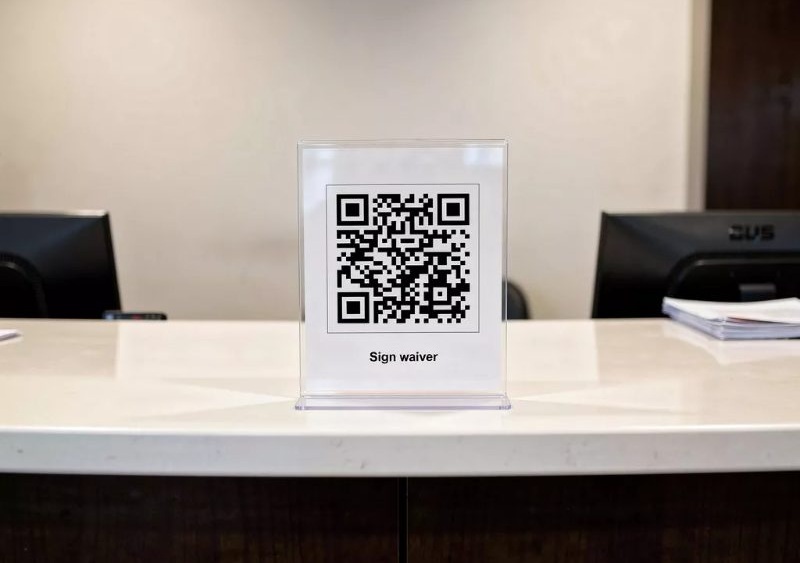
QR codes link straight to booking information and match each waiver to the right activity.
Children and minors
Parent and guardian relationships matter too – especially if you run family tours. The best software guides users to the right forms based on who’s participating (adults, minors, or both), so parents can properly approve their children’s participation.
How to use waiver data to improve your business
Digital tour waivers are nowhere near just legal documents; they’re gold mines of customer information waiting to be tapped. Tour businesses that properly control this data get the most important advantages in marketing, retention, and customized experiences.
CRM integration and email marketing
Your waiver system should connect with your customer relationship management (CRM) tools. Quality waiver software lets you export contact data through simple CSV downloads that naturally upload into platforms like Mailchimp, Constant Contact, or HubSpot.

Smart businesses add marketing opt-in checkboxes during the waiver signing process. This builds your email list with proper permission and compliance. You can segment your audience based on their interests shown in the waiver details. A guest who booked a kayaking tour might receive paddling-related offers. Zipline guests could hear about upcoming aerial adventures.
Using notes and tags for personalization
Waivers can collect vital segmentation data beyond basic contact details. Strategic questions like “What’s your relationship with our area?” with options like “I’m a local,” “I visit frequently,” or “I rarely visit” help shape your marketing approach.
Your team can add private customer notes to track priorities and special requests. These details create thoughtful personalization during future interactions.
Timing matters in follow-ups. You can measure success by tracking open rates, click rates, and repeat booking rates within 30-90 days after the original experience.
Choosing the right waiver software for your tours
Your tour business needs the right waiver software, and choosing one means you need to think over pricing structures, growth potential, and features. Let’s get into how to make this important choice.
Flat-rate vs. feature-based pricing
The tour waiver software market has two main pricing approaches. The number-of-waivers model (flat-rate) bases charges only on waiver volume and includes all features in each package tier. This leads to predictable costs with fewer surprises.
The feature-based model works differently by limiting functionality at lower price points. Smaller operations face a disadvantage here because they must buy larger packages to get basic features, even though they need fewer waivers.

Your operational patterns should determine which pricing works best. Many providers give seasonal pricing options when you don’t need waivers all year.
Why Bookeo is the best booking software for tour providers
The right online booking platform makes a huge difference after you select your waiver software.
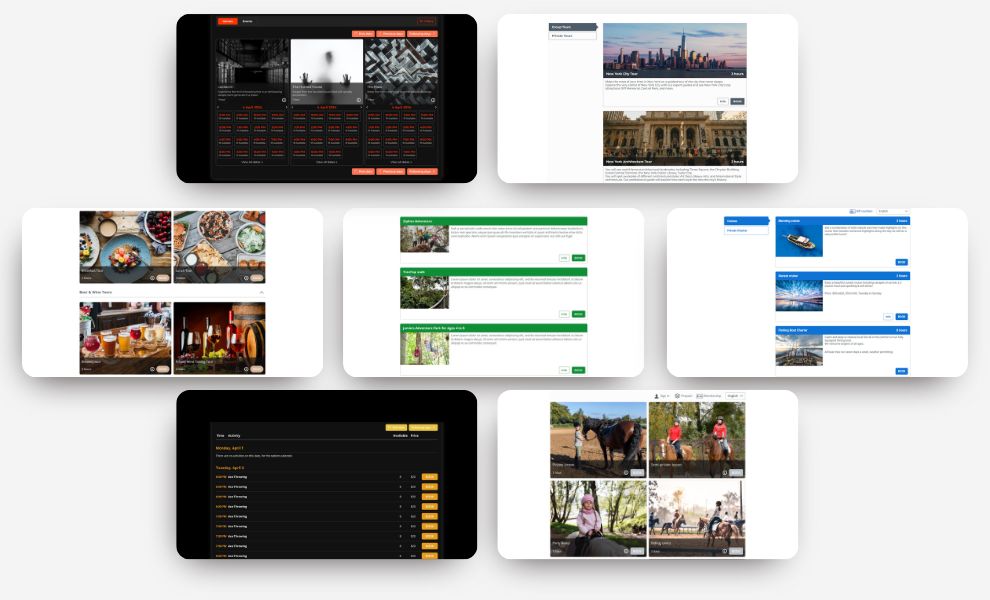
Tour providers who want to improve their waiver management find Bookeo the best choice.
Continuous connection with waiver tools
Bookeo’s tour booking software has its own waiver management feature that lets guests complete waivers online before they arrive. Your dashboard displays signed waivers that link automatically to customer profiles and bookings. This helps you spot missing waivers right away. Your customers and staff save valuable time through this integration.
Automated confirmations and reminders
Tour companies see a 22.95% drop in cancellations by using automated communication systems. Bookeo shines by sending automatic booking confirmations through email and text. The system improves check-in by showing recommended arrival times on confirmation pages. Your guides get instant updates about new, rescheduled, or canceled tours.
Centralized customer data and reporting
Your dashboard shows up-to-the-minute data analysis whenever customers book online.
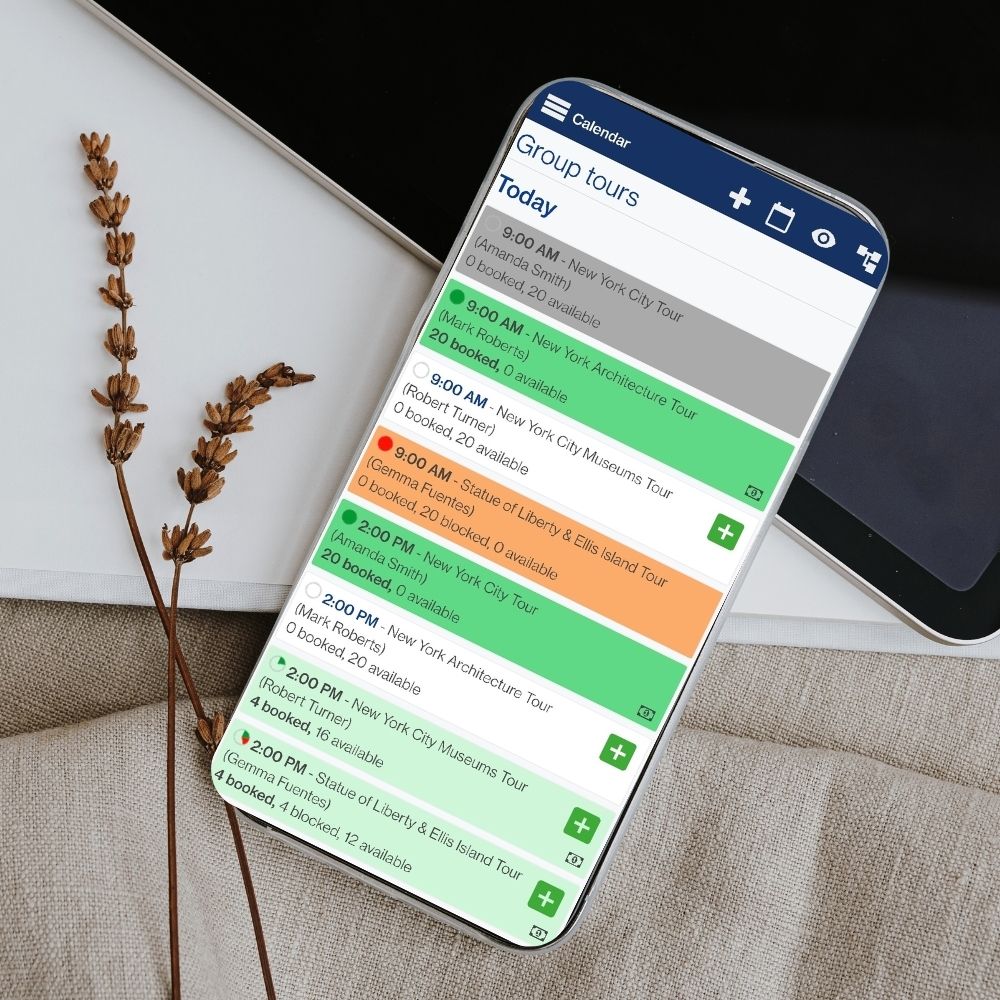
The calendar lets you view reservations, staff rosters, and payments from any location. You can print tour lists with participant details, payment information, and chosen options. A single source of truth for all booking data reduces manual errors and improves operations.
Conclusion
Tour waivers are a vital part of running a successful tour business. This piece shows how these legal documents protect you from potential lawsuits and help set clear expectations with clients. Accidents can happen even with the best safety measures, which makes proper liability protection a must.
The move to digital waivers has brought major improvements for tour providers. These solutions save time, cut down on storage problems, and make things better for your guests. These electronic documents carry the same legal weight under the E-Sign Act when they meet simple requirements.
Your waiver process gives you valuable business benefits beyond legal protection. The data helps you spot returning customers, create tailored experiences, and target your marketing better. Tour providers have found that good waiver systems can get 80% more customer data than just using booking information.
Bookeo’s booking software pairs perfectly with top waiver solutions to create a smooth experience from reservation to check-in. This setup automatically sends waivers when someone books, tracks who has completed them, and unites customer information in one place. You’ll spend less time on paperwork, check guests in faster, and give them a better experience.
Waivers don’t take away your duty to keep experiences safe, but they’re a vital part of managing risk. You should combine solid safety rules, proper staff training, good equipment care, and well-written waivers that clearly show the risks.
Smart business owners know that good tour waivers do more than protect legal interests – they boost the customer’s experience and give valuable business insights. Set up a proper waiver system now, and you’ll avoid many problems later.