

Driving School Marketing: Proven Strategies to Double Your Student Enrollment
Driving school marketing has changed, with over 15 million Americans taking driver’s education annually. Your success depends on connecting with potential students where they spend their time, on Google search, Instagram, and TikTok. The difference between growing your enrollment and struggling to fill seats comes down to implementing the right marketing strategies. In this piece, we walk you through proven driving school marketing ideas. You’ll learn to build a high-performing website and become skilled at local SEO. We’ll also cover how to leverage paid advertising and create engaging social media content that converts browsers into booked students.
Build a high-performing driving school website
Your website serves as your first instructor. Most potential students research driving schools online before they pick up the phone. Your site needs to convert visitors into bookings within seconds. A poorly designed website costs you enrollments daily.
Essential features your website must have
Student drivers and their parents look for specific information when they evaluate driving schools. Your website must answer their questions right away.
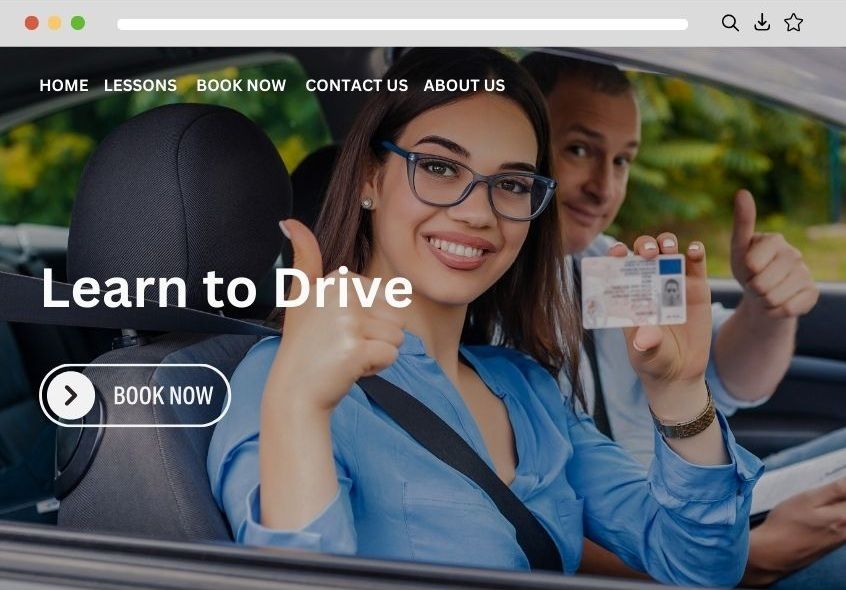
Clear navigation sits at the top of the priority list. Visitors should find what they need in three clicks or less. Display your menu with sections for services, pricing, instructors, and contact information.
Detailed business information builds trust faster than anything else. Share your instructor qualifications, years in business, and teaching methods. Parents want to know who will be teaching their teenagers.
Transparent pricing stops visitors from bouncing to competitors. List your rates for individual lessons, package deals, and intensive courses. Breaking down costs by service type helps families budget.
Complete service descriptions prevent confusion. Outline each offering, from beginner lessons to motorway training and pass plus courses. Explain who each program serves and what students can expect.
Multiple contact options capture more leads. Phone numbers, email addresses, contact forms, and your physical location with embedded Google Maps should all be there. Some people prefer calling, while others want to submit forms on their own schedule.
Student testimonials provide social proof that converts hesitant visitors. Feature reviews from satisfied students and parents, including video testimonials when possible. Display ratings from Google Business and other review platforms.

Educational resources keep visitors engaged longer. Add blog posts about driving test preparation, safety tips, and answers to common questions. This positions you as an expert while it improves your search rankings.
Mobile optimization and user experience
Mobile devices generate 55.56% of total web traffic. Your driving school website must perform flawlessly on smartphones and tablets.
Responsive design adapts your site layout to different screen sizes. Text remains readable, buttons stay clickable, and images scale properly whether someone browses on a phone or a desktop.
Loading speed directly affects your conversion rate. Compress images, minimize code, and use fast hosting to keep your site snappy. Students researching driving schools won’t wait for slow pages to load.
Touch-friendly navigation matters on mobile devices. Make buttons large enough to tap, space clickable elements appropriately, and streamline your menu for smaller screens.

Then test your website on multiple devices. What looks perfect on your computer might break on certain phones. Check load times, form functionality, and booking processes across different browsers and screen sizes.
Online booking system integration with Bookeo
Online booking removes friction from your enrollment process. Students can schedule lessons anytime without calling during business hours.
Bookeo’s driving school scheduling software provides driving schools with a complete scheduling solution that accepts bookings 24/7. Students view your up-to-the-minute availability, select their preferred time slots, and complete payments directly through your website.
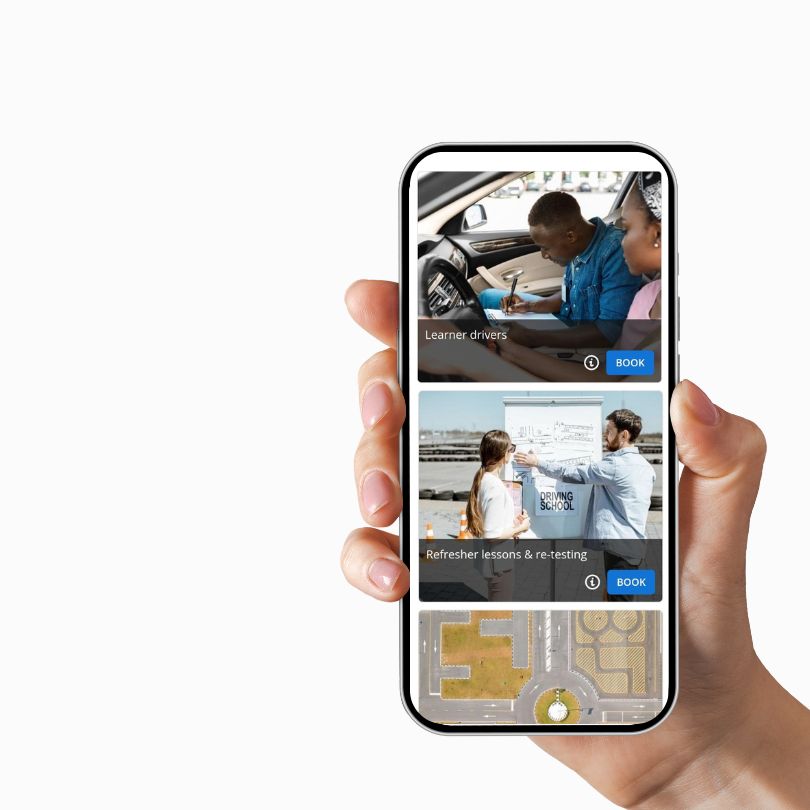
The online booking platform offers two integration options. You can embed Bookeo’s booking widget directly into your existing website – including Wix and Squarespace. Students can book without leaving your site. Alternatively, use Bookeo’s standalone branded booking page.
Customization options let you match the booking interface to your brand. Select colors and styles that line up with your driving school’s visual identity. The booking page displays professionally across all devices without requiring a separate mobile app.
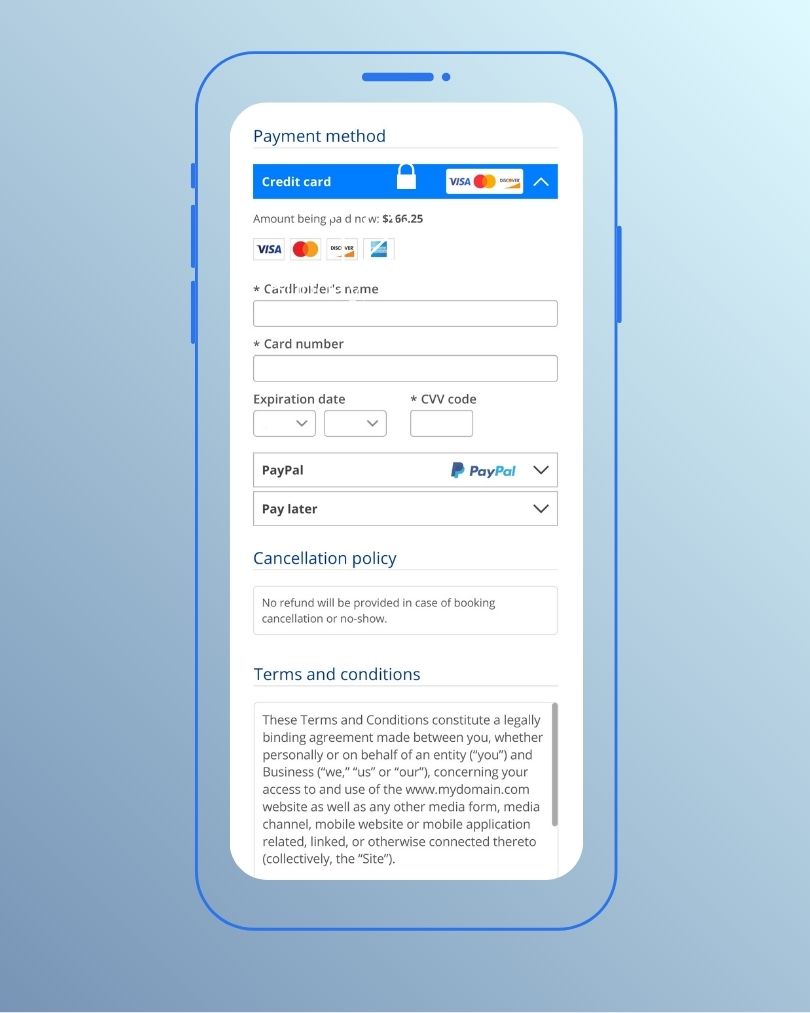
Payment processing integrates easily through trusted gateways, including Stripe, Square, and PayPal. Students can pay for lessons, purchase packages, or leave deposits at the time of booking. All transactions are consolidated in a single centralized dashboard for easy tracking.
Automated reminders reduce no-shows substantially. Bookeo sends instant confirmation emails when students book, followed by scheduled reminders before their lessons via email or SMS. You control the timing and content of these notifications.
Calendar synchronization keeps your schedule organized. Bookeo connects with Google Calendar, iCloud, Outlook, and Office 365. Updates happen in real time across all your devices. This prevents double bookings and scheduling conflicts.
To cite an instance, when a student books a lesson, that time slot becomes unavailable right away. Other students see only your open availability. This eliminates confusion and overlapping appointments.
The system also supports prepaid lesson packages and memberships. You can sell multiple lessons upfront. Students can book recurring lessons for consistent weekly or monthly sessions.
Master local SEO to attract nearby students
Local search drives the majority of your student enrollment. Parents and teens search for driving lessons, and 33% of all clicks go to the top three search results on Google’s first page. You miss those positions and lose potential students to competitors who rank higher.

The U.S. alone sees over 301,000 monthly searches for driving schools. Capturing even a small percentage translates into substantial enrollment growth. Local SEO strategies position your driving school exactly where students look first.
Claim and optimize your Google Business Profile
Your Google Business Profile represents the single most powerful local marketing tool available. Start by searching for your driving school name on Google Maps to check if a profile already exists.
You find an unclaimed profile? Click “Claim this business” and follow the verification process. Google offers several verification methods: email, phone, text, video recording, or postcard. Complete this step right away, as unverified profiles receive limited visibility.
Does someone else own the profile? You can request an ownership transfer. Submit your request through Google Business Profile Manager. The current owner receives three days to respond. They don’t respond? You gain the option to claim the profile yourself.
Complete every profile section to maximize your visibility. Add your full business name, accurate physical address, phone number, and operating hours. These NAP details (Name, Address, Phone number) must match exactly on all online platforms.
Select the appropriate business category. Choose “Driving School” or “Driving Instructor” as your primary category. Categories function as ranking signals, so accuracy matters.
Upload high-quality photos of your vehicles, instructors, and facility. Profiles with photos receive 42% more requests for directions on Google Maps and 35% more website clicks. Include exterior shots of your office, images of instructors with students, and pictures of your fleet.

Write a compelling 750-character business description. Start with your business model and explain your services. Mention your service areas and include natural keywords. To cite an instance, describe your approach to teaching nervous drivers or highlight your pass rate.
Encourage satisfied students to leave reviews on your profile. Reviews influence local rankings. Reply to every review, both positive and negative, to demonstrate you value feedback.
Publish regular posts on your Google Business Profile. Share updates about special offers, driving test tips, or student success stories. Posts keep your profile active and engaging.
Use location-based keywords effectively
Location-based keywords connect you with students searching in your area. Incorporate phrases like “driving instructor in [Your City]” throughout your Google Business Profile description.
Target specific neighborhoods and suburbs you serve. You operate in Los Angeles? Optimize for “Los Angeles driving school,” “Santa Monica driving lessons” and “Pasadena teen driver education”. Each service area deserves its own keyword focus.
Place these keywords naturally in your website’s titles, meta descriptions, headers, and body content. Create dedicated location pages if you serve multiple cities. Each page should include specific information about services in that area and local landmarks.
Your service area settings on Google Business Profile determine where you appear in local searches. Configure this carefully to include all regions where you teach students.
Get listed in local directories
Directory listings confirm your business information to search engines while building valuable backlinks. Start with general high-authority sites: Yelp, Foursquare, and Apple Maps.
Register on driving school-specific directories next. Free options include Driving Schools (USA), Find-a-Driving-School.ca (Canada) and GetPassed. These niche platforms attract students actively searching for instruction.
Maintain similar NAP information on every directory. Inconsistent details confuse search engines and hurt your rankings. Use tools to track your citations and confirm accuracy.
Prioritize directories relevant to your country and region. Focus on platforms where your target students actually search rather than signing up everywhere randomly.
Leverage paid advertising for immediate results
Paid advertising delivers what organic strategies can’t: instant visibility. Local SEO builds momentum over months, but Google Ads and Facebook campaigns place your driving school in front of ready-to-book students within hours.
Google Ads for driving schools
Your Google Ads performance hinges on targeting people who actively search for driving instruction. Generic keywords like “driving” attract irrelevant clicks that drain your budget without producing enrollments.
High-intent keywords deserve your focus instead. Phrases such as “driving lessons near me,” “book driving test appointment,” and “teen drivers ed with weekend classes” indicate purchase readiness. Location modifiers strengthen your targeting further. Add your city name or ZIP code to capture local searchers exclusively.

Tight geographic targeting prevents wasted spend. Define a radius of 5 to 10 miles around your teaching zones. A Pasadena driving school trimmed its ad radius to 8 miles and saw a 45% drop in cost-per-click. Exclude distant areas from your campaigns if you don’t serve them.
Your landing pages convert clicks into students. Generic homepages confuse visitors and kill conversions. Build focused pages that speak directly to the keyword someone searched. Include clear pricing and customer testimonials with a prominent call-to-action like “Book Your Lesson Today”.
Ad extensions expand your search results and boost click-through rates. Call extensions let prospects phone you from mobile devices instantly. Sitelink extensions direct users to specific pages like “Teen Programs” or “Pricing”. Structured snippets highlight facts such as “State-Certified Instructors” or “Available 7 Days a Week”.
Seasonal adjustments maximize returns. Driving lesson demand spikes during summer break, school holidays, and months when teens turn 16. Increase bids and budgets during July, August, December, and early January. One Florida school reallocated its overnight ad budget to weekend afternoons and achieved a 33% lift in conversions.
Remarketing recaptures lost opportunities. Students who clicked your ad but didn’t book can return through Remarketing Lists for Search Ads. Tailor follow-up messages like “Classes fill fast near [city]. Book your spot now” to nudge them toward enrollment.
Set your cost-per-click based on course prices. A $400 program justifies $8 to $12 per click, while refresher lessons need lower bids. Pause underperforming ads weekly to keep campaigns efficient.
Facebook and Instagram ad targeting
Social media advertising reaches students before they start searching Google. Research shows most teens begin planning for their license months before turning 16, while parents research driving schools even earlier.
Segment your audiences into distinct groups. Teen students aged 15 to 17 respond to different messaging than parents aged 35 to 55 or adults aged 18 to 30 who seek instruction. Create separate campaigns for each group with customized visuals and copy.
Facebook Custom Audiences re-engage past website visitors or leads. Lookalike Audiences attract others who match your top converters. Set up location pins with a 5 to 10-mile radius around your teaching zones. Mention neighborhood names in headlines and creatives.
Choose campaign objectives carefully. Lead Generation uses Facebook’s native forms for quick, mobile-friendly conversions. Traffic objectives send people to landing pages you control. Messages work well if you chat with prospects via Messenger. Avoid the Engagement objective unless you’re building awareness with no lead generation expectations.
Build a full funnel approach. Run awareness campaigns to cold audiences, consideration campaigns to warm prospects, and conversion campaigns to hot leads. Each stage operates as a dedicated campaign that teaches Meta’s algorithm who converts.
Upload CRM or booking data back into Facebook to calculate which campaigns deliver actual students. Sync Flash Offers with high-demand dates to fill urgent spots quickly.
Setting your advertising budget and tracking ROI
Tracking return on investment prevents budget waste. You spend money without knowing which ads earn revenue when you skip measurement.
Cost Per Acquisition shows the average amount spent to gain one customer. Calculate it by dividing total ad spend by conversions generated. Your CPA is $50 if you spent $500 and acquired 10 customers. Your CPA must stay lower than the customer lifetime value for profitability.
Return on Ad Spend measures revenue generated per dollar spent on advertising. A ROAS of 3:1 means you generate $3 for every $1 spent. To name just one example, if ad spend equals $5,000, and revenue reaches $15,000, your ROI calculates to 200%.
True advertising costs extend beyond ad spend. Include creative production costs, landing page development, marketing software tools, and agency fees. Accurate cost calculation reveals true profitability.

Set up conversion tracking through Google Analytics, Google Tag Manager, and Facebook Pixel. These tools monitor user actions such as purchases, sign-ups, and form completions.
Attribution models identify which channels contributed to conversions. Options include first-click attribution, last-click attribution, linear attribution, and evidence-based attribution.
Optimize through A/B testing, segmented audience targeting, and budget reallocation based on performance data. Target keywords with strong purchase intent, like “buy software online” or “best CRM tool pricing” generate better ROI than informational queries.
Retargeting ads bring back previous website visitors, since most don’t convert during their first visit. This strategy represents one of the quickest ways to increase conversion rates.
Create engaging social media content
Social media connects you with students before they ever search Google. You build relationships and showcase your expertise when you meet potential customers where they already spend hours daily. Quality interactions matter more than constant posting.
Share student success stories and testimonials
Success stories from actual students create trust faster than any advertisement you could run. Ask students to share their experiences after passing their road test. Video testimonials deliver strong results when you have real people celebrating their achievements.
Feature photos of students holding their driving certificates on test day. Always request permission before posting images. One driving school posts photos with heartfelt captions about how instructors helped students build confidence and improve with each lesson.
Testimonials work because prospective students trust them almost as much as word-of-mouth referrals from friends or family. Showcase these reviews across your social channels. Parents researching your school want to hear from other parents who’ve already enrolled their teenagers.
Written reviews complement video content. Share quotes from satisfied customers. They should describe specific instructors, teaching methods, or how your school helped nervous drivers gain confidence. Authenticity beats polished production value every time.
Post educational driving tips and safety content
Educational content makes your school a helpful resource rather than just another business seeking customers. Share 30-second videos that demonstrate parking techniques, merging onto highways, or proper braking methods.
Rotate these three post types weekly: educational clips that show specific maneuvers, instructor spotlights that highlight certifications and experience, and live Q&A sessions that address common fears. This variety keeps your audience engaged while covering different aspects of driver education.

Create text-based images with driving tips or Highway Code facts when you lack original photos. To name just one example, post graphics stating “Did you know? You must drive around a mini roundabout instead of going over it”. These perform well on Instagram, where visual content dominates.
Track engagement rates monthly. Content that performs well on one platform often works elsewhere with minor tweaks. Stay adaptable since what strikes a chord this quarter might move next period.
Use Instagram Reels and TikTok for younger audiences
TikTok currently represents the best platform to reach younger audiences. Teen-focused programs thrive on quick tutorials that demonstrate clutch control, braking techniques, and parking skills[232].
Consistency drives visibility on these platforms. Aim for three to five posts daily. TikTok’s algorithm promotes content based on engagement metrics rather than follower count. This means new driving schools can compete right away.

Participate with every comment, even negative ones. Interaction boosts your video’s performance. Respond within 12 hours to build community trust. Use hashtags like #RoadReady, #FirstLicense, or #DrivingTips to join local conversations.
Don’t stress about going viral at first. Focus on enjoying the content creation process while providing value. Use your instructors’ skills or teaching approaches to distinguish your content and attract viewers.
Participate with parents on Facebook
Adults prefer Facebook’s posts about insurance discounts and program information. This platform lets you create events, share longer educational articles, and build community engagement.
Parents aged 35 to 55 respond differently from teenage students. Address their concerns by posting about safety records, instructor qualifications, and how your teaching methods prepare their children for real-life driving situations.
Respond to every comment and message without delay. Active engagement converts followers into community members and eventually into customers. Share relevant information and participate in local online communities related to driving education and safety awareness campaigns.
Implement email marketing campaigns
Email marketing remains one of the most affordable channels for driving school marketing. Social platforms change algorithms overnight, but your subscriber list belongs entirely to you. This direct line to potential and current students drives enrollments without competing for attention in crowded feeds.
Build your email subscriber list
Collect email addresses wherever you interact with prospects. Your website, phone calls, open houses, and first-lesson registrations all present opportunities.
Website pop-ups offering free study guides convert browsers into subscribers. Place opt-in forms on your homepage, blog posts, and pricing pages. Parents researching driving school marketing ideas appreciate downloadable resources like parking technique guides or test preparation checklists.
Segment subscribers right away into practical groups: interested but not booked, first-time lesson scheduled, full package customers, recently licensed students, and loyal referrers. A parent of a 16-year-old expects different communication than a 38-year-old learning to drive for career requirements.
Ask for email addresses during every phone conversation. Habit matters here. Someone calls about lesson availability? Capture their contact information before ending the call. Registration forms, whether digital or paper, should always include an email field.
Design effective promotional emails
Each email needs a clear objective with one straightforward call-to-action. You want recipients to book a course, read a blog post, or follow you on Instagram? Make that request obvious. Use buttons or hyperlinked text that stands out visually.
Personalization tokens transform generic messages into relevant communications. Include the prospect’s name and the specific program they asked about. This small step makes students feel valued rather than treated like numbers.
Mix educational content with enrollment incentives in monthly updates. Share bite-sized driving tips about parallel parking techniques alongside limited-time discount codes. Celebrate student milestones by featuring pass-rate updates.
Subject lines determine whether anyone opens your message. Test different approaches through A/B testing. Send two variations to see which performs better, then apply those insights to future campaigns.
Schedule automated follow-up sequences
Automation keeps your school visible without manual effort. Welcome sequences do the heavy lifting by educating leads and building trust. They nudge prospects toward decisions at appropriate intervals.
A four-part welcome series works well: “What to Expect from Your First Lesson” sent right away, “Meet Our Instructors” on day two, “Booking Guide + Save $10 This Week” on day four, and “Student Story: How Sarah Passed Her Test in 4 Weeks” on day six.
Trigger-based campaigns respond to student behavior in real time. Someone who abandoned booking receives “Need Help Finishing Your Sign-Up?” Students who just scheduled their first lesson get “Here’s What Happens Next.” Those who passed their road test receive “Congrats! We’d Love a Quick Review”.
Lesson reminders reduce no-shows by a lot. Send confirmations one day before appointments with time, location, and what to bring. Follow with final reminders two hours before pickup.
Track open rates, click-through rates, conversion rates, and unsubscribe rates to measure campaign success. This data reveals what appeals to your audience and what needs adjustment.
Partner with local institutions and organizations
Schools and community organizations represent untapped enrollment channels for most driving schools. These partnerships place your services in front of students who need them and build credibility through institutional endorsement.

Connect with high schools and colleges
High schools seek quality driver education options for their students. Educational institution partnerships give you access to concentrated groups of potential customers at the exact age they need your services.
Revenue-sharing arrangements benefit both parties. You can provide schools with a percentage of enrollment fees, rental fees for classroom space, program sponsorships, or donations. These financial incentives make schools enthusiastic partners who promote your services to students and parents.
Bulk discount programs attract institutional adoption. Thousands of high schools, non-profits, and businesses purchase state-approved courses at reduced rates for their student populations. Schools gain full control over how and when students complete the coursework. You secure large enrollment blocks.
Teacher training programs create additional partnership opportunities. Some driving schools train and certify school teachers to deliver driver education. This approach generates revenue and expands your reach into the school system.
Fundraising programs strengthen school relationships. Sponsor athletic teams, sporting events, or drama programs. Set up information booths at school events and provide free driving safety workshops. Work with career advisors to position driver education as an essential life skill.
Safe Driving Summits demonstrate partnership effects at scale. The Georgia partnership has hosted summits with 81 high schools and engaged more than 14,300 students since 2022.
Cooperate with community organizations
Non-profit organizations and city agencies need transportation training for their clients. Customize your curriculum for life skills learning programs. Provide flexible scheduling by picking up employees or clients, or arrange special hours that accommodate organizational needs.
Join free partnership networks like Virginia Partners for Safe Driving, which has over 275 businesses, organizations, and state agencies. Members receive monthly newsletters, marketing materials, and invitations to exclusive events at no cost.
Provide special rates for institutional partnerships
Corporate partnerships require different pricing structures than individual customers. Develop packages that include insurance discounts for business operations. Custom curriculum and driver report cards add value for organizations managing multiple learners.
Host events and workshops in your community
Community events position your driving school as a safety leader while connecting you with families who need your services. Visibility at local gatherings gets word-of-mouth referrals that paid advertising can’t match.
Participate in teen driver safety weeks
National Teen Driver Safety Week runs October 18-24, 2026. NHTSA’s 5 to Drive campaign focuses on critical safety behaviors, including no cell phone use while driving, no extra passengers, no speeding, no alcohol, and wearing seat belts. Partner with local high schools and host awareness sessions during this week.
Fatal Vision Alcohol Impairment Clinics demonstrate impaired driving consequences through simulated experiences. These goggles replicate the behaviors of individuals impaired at different BAC levels and create memorable educational moments. Schools and parent organizations seek instructors who can aid these influential demonstrations.
Attend local school events
Set up information booths at back-to-school nights, college fairs, and graduation ceremonies. Bring enrollment materials, safety resources, and special discount codes for attendees. Parents appreciate speaking face-to-face with instructors before committing to a program.
Community car care workshops attract families while showcasing your expertise. To name just one example, teach simple maintenance skills like tire changes and oil checks. These free sessions build goodwill and keep your school top-of-mind when attendees need driving instruction.
Create your own defensive driving workshops
The National Safety Council has trained over 80 million drivers since trailblazing defensive driving courses in 1964. You can become an NSC authorized instructor and deliver these respected programs in your community. Six-hour defensive driving courses cost around $90 per participant.

AARP Driver Safety programs provide another credible framework. Host AARP Smart Driver courses at your facility, and AARP supplies trained instructors, course materials, and promotional resources. These partnerships add legitimacy while filling your calendar with revenue-generating workshops.
Encourage referrals and online reviews
Word-of-mouth drives enrollment growth more effectively than most paid advertising channels. Satisfied students become your credible salespeople when you create structured ways for them to share their experiences.
Set up a customer referral program
Referral programs benefit everyone involved. 160 Driving Academy pays $250 for each friend who completes their 4-week training program and receives a CDL license. 2020 Driving School offers referral bonuses to students who recommend friends for instruction as well.
Your incentives should motivate customers based on what they value most. Discounts, free lessons, or cash all work depending on your audience. Offering a free lesson with every successful referral appeals to students still working toward their license. Cash rewards attract those who’ve already completed training.
Make sharing effortless through email and social media channels. Students need simple ways to track their referrals and redeem rewards without hassle.
Request reviews from satisfied students
Timing matters a lot when you request feedback. Ask students after their lessons when satisfaction levels peak. Send follow-up messages with direct links to your review pages on Google, Facebook, and Yelp.
Respond to reviews professionally
Response rates affect your reputation in major ways. 94% of consumers avoid businesses after reading bad reviews, yet 45% become more likely to visit when businesses respond to negative feedback. More than that, 53% expect responses within seven days. Address reviews using the reviewer’s name, acknowledge their experience, and provide direct contact information for further discussion.

Conclusion
Growing your driving school enrollment requires you to combine multiple marketing strategies rather than rely on a single channel. Your website acts as your digital storefront. Local SEO brings students searching nearby, and paid advertising delivers immediate visibility. Social media builds relationships before prospects ever search Google. Email marketing nurtures leads until they book.
Start with the simple steps: claim your Google Business Profile and integrate Bookeo’s class booking system. Collect reviews from satisfied students. These foundational steps produce results within weeks. Layer in paid advertising during peak enrollment seasons and create engaging content that showcases your expertise. Most importantly, track your results, so you know which strategies fill your calendar with paying students.