

Yoga Class Waiver: What to Include and How to Collect It Online
Running a yoga business without a detailed liability waiver? You’re walking on eggshells.
A yoga liability waiver serves as a legal document that reduces the risk of liability for yoga instructors and studios when participants face physical or emotional injury during class. This type of waiver won’t guarantee complete protection against personal injury liability, but it helps build a stronger case in court if issues arise. Most yoga studios now require students to sign a release of liability before they join classes.

These waivers don’t cover legal costs or provide financial support if someone sues you; they just help reduce risk. Expert yogis recommend using both a waiver and insurance for the best protection. Your waiver reduces legal risk, and insurance handles financial liabilities.
Your yoga class waiver serves as your primary defense against liability in today’s environment. This piece will outline what should be included in your yoga teacher liability waiver and provide guidance on how to collect and manage these documents online to protect your yoga practice.
What is a Yoga Class Waiver?
Yoga liability waivers serve as the primary legal defense for yoga professionals. This legal document creates a binding agreement between you and your students that clearly outlines the potential risks of yoga practice.
Definition and purpose of a yoga class liability waiver
The core purpose of a yoga liability waiver lies in its agreement, where students voluntarily relinquish their right to take legal action against you if they get injured during class. This document goes beyond just releasing liability:
- Students learn about the risks inherent in yoga practice
- Students get a chance to assess their health and yoga suitability
- Students receive extra details about the class that they might not know
- Students establish a written contractual relationship

A well-laid-out yoga class waiver helps both teacher and student understand the activity, its risks, and mutual expectations. Legal experts say yoga teacher liability waivers must meet four essential requirements to work: clarity, lack of ambiguity, unequivocal terms, and specificity.
Your yoga studio waiver should include these elements:
- A detailed description of student activities
- A thorough list of potential risks
- Clear statements about voluntary participation
- A signature section where clients waive future claims
How it protects yoga teachers and studios
A properly written yoga liability waiver helps defend your studio in court against lawsuits. While not guaranteeing complete protection from litigation, many cases show waivers leading to dismissed lawsuits.
Yoga teachers can make stronger court cases with waivers if students claim injury from instruction. Teachers working at other studios should verify their coverage under the studio’s waiver terms. Some liability releases apply only to regular classes, not special workshops or events.

Studios benefit because students must disclose their limitations or medical conditions, which helps guide them safely. This preventive aspect of waivers reduces injury risks.
The waiver shields specifically against ordinary negligence claims. This difference matters since gross negligence usually falls outside waiver protection. Students who acknowledge and accept yoga’s inherent risks help establish legal foundations that discourage litigation.
Independent yoga teachers working outside traditional studios, in homes, parks, or community centers, need their own release of liability. Gary Kissiah, a lawyer and yoga teacher serving the wellness community, recommends having students sign detailed agreements covering liability, health information, and policies.
Note that waiver laws differ in countries, states, and provinces. A legal professional should review your waiver language to ensure it holds up in your jurisdiction.
Why Every Yoga Teacher Needs a Liability Waiver
Physical activity comes with risks, and yoga is no different. Many teachers don’t realize how common yoga-related injuries can be, despite its reputation as a gentle practice.
Legal risks in yoga instruction
Yoga teachers face the most important liability risks. Your role as an instructor makes you legally responsible for your students’ safety during practice. Your personal assets could be at risk without proper legal protection.
We identified two main categories of legal exposure in yoga instruction:
- Allegations of negligence: Students might sue for damages if they get injured and believe you didn’t provide proper instruction or supervision.
- Claims of inappropriate conduct: These claims involve sexual misconduct through improper adjustments or inappropriate touching.

The relationship between yoga instructors and students creates what legal professionals call a “duty of care.” You have a legal obligation to give reasonable guidance and protect students from harm you can foresee.
Accidents can happen even with the best preparation. Students might strain muscles, lose their balance, or face issues from health conditions they didn’t mention. You could face reputation damage and financial drain if they hold you responsible.
More studios now won’t hire teachers without liability protection. Liability waivers have become a business necessity, not just a legal safeguard.
Jessica Passman, Of Counsel at Michael H Cohen Law Group, suggests making liability waivers “a routine part of registering a new student”. This sets clear expectations right from the start of your teacher-student relationship.
Common scenarios where waivers help
Real-life situations show why yoga liability waivers give critical protection:
- Hands-on adjustments: Physical adjustments carry some of the highest risks in yoga teaching. Take Amalia Webster’s case against instructor Kurt Bumiller. She claimed injury after he placed a belt around her waist and pushed down on her lower back. The case was dismissed, but it shows how physical adjustments can lead to lawsuits and how a proper waiver might have stopped the lawsuit before it started.
- Students with undisclosed conditions: Students often don’t mention their pre-existing injuries or medical conditions that make them more likely to get hurt. A complete waiver has sections where students confirm they can physically participate.
- Online teaching scenarios: Virtual classes bring unique challenges. You don’t know how to prevent injuries without being there in person. Online yoga waivers make these limitations clear and help participants take responsibility for their safety.
- Outdoor or non-studio settings: Teaching in parks, beaches, or community centers puts you at risk from environmental hazards you can’t control. Your liability waiver should address these location-specific risks.
A well-executed yoga waiver does more than provide legal protection. It teaches students about possible risks, encourages them to share health conditions, and builds mutual understanding.
Liability waivers can’t protect you completely. They usually cover ordinary negligence but not gross negligence or reckless behavior. They work best as part of a complete risk management strategy that includes liability insurance.

Note that yoga liability waivers’ enforceability depends on your location. Courts generally favor waivers that are clear, specific, and given before participation starts.
What a Yoga Waiver Can and Cannot Do
Legal boundaries of yoga liability waivers help set realistic expectations about your protection. These waivers, like any legal tool, have specific capabilities and limits you should know about.
Covers ordinary negligence, not gross negligence
Yoga liability waivers protect against claims of ordinary negligence – situations that show a general lack of care during instruction. A student who experiences minor strain during a normal pose falls under this category.
In spite of that, these legal documents can’t shield you from claims of gross negligence. Gross negligence shows an extreme lack of care that goes way beyond ordinary oversight. Your waiver won’t protect you if you force a student into an advanced pose that causes injury.
The difference matters a lot:
- Ordinary negligence: You accidentally give unclear instructions for a pose
- Gross negligence: You push an obviously uncomfortable student into a dangerous position despite their protests
Courts won’t enforce waivers that try to excuse truly negligent behavior. Your waiver should never claim protection for extreme forms of negligence or outrageous conduct.
Limitations in court enforcement
Well-crafted waivers still face several enforceability challenges:
- Students can take legal action despite signing a liability waiver. Waivers discourage litigation but can’t completely prevent lawsuits.
- Courts might reject waivers they see as unfair or unclear. Your waiver’s ambiguity, loopholes, or errors can be easily challenged in court. A lawyer should review your waiver because of these risks.

- Waivers protect only the specific activities mentioned in the release form. You might still face liability if a student gets hurt during an activity not clearly described.
- Location plays a big role in enforcement. Laws about waivers vary between countries, states, and provinces. Some places have strict rules that waivers must follow to hold up in court.
Why waivers alone are not enough
Legal protection has dangerous gaps if you rely only on waivers:
- You’ll still pay legal fees and other costs to defend yourself, even with an upheld waiver. These expenses add up quickly.
- Waivers give no financial protection against claims. You won’t have a financial safety net like insurance if you lose a case or need to settle.
- Waivers serve as your first defense line. Complete protection needs multiple layers with both legal documentation and financial safeguards.
- Professional yoga instructors recommend using both waivers and liability insurance.
Insurance acts as your backup plan if someone files a claim. It covers what waivers can’t – including legal defense costs and potential settlements.
Waivers reduce your risk best when part of a detailed protection strategy that includes proper insurance, excellent safety protocols, and regular updates to match current laws.
Things to Include in a Yoga Liability Waiver
Your yoga business needs a well-crafted liability waiver that protects you and sets clear expectations for students. Let’s look at everything your yoga class waiver must have:
Clear description of activities
The waiver should start with a complete description of what students can expect in class. List the type of yoga you teach and its physical requirements. To name just one example, hot yoga teachers should mention the room temperature (typically 105°F) and humidity level (around 40%).
Students need to know about poses, movements, and techniques they’ll practice. Make it clear that “in the context of a yoga class, teachers may physically adjust and correct the student”. This clarity supports your “practice at your own risk” statement.

Start by describing common elements like breathing exercises, meditation, physical poses, and the equipment you use. Then add details about class duration, typically 90 minutes for certain styles. This detail prevents students from saying they didn’t know about specific activities.
Acknowledgment of risks
Students must clearly recognize the risks of practicing yoga. They should understand that “participation in yoga class may be hazardous” and that yoga “involves physical movement with potential risk of injury”.
Key risks to list include:
- Physical injuries like muscle tears, strains, and sprains
- Cardiovascular complications
- Heat exhaustion and dehydration (especially for hot yoga)
- Dizziness and fainting
Students must confirm they “possess the level of health, strength, fitness, and flexibility necessary to participate”. They should also understand that yoga “requires a certain minimum level of physical health”. This puts the responsibility on students to assess their fitness level.
Voluntary participation clause
This vital section shows students join your class by choice. Your waiver needs language where students acknowledge they “voluntarily participate with knowledge of the risks of injury” and “assume full responsibility for any risk, injury, or discomfort”.
Students must state they are “participating voluntarily and assume all risks associated with participation”. Courts tend to uphold waivers more often when students clearly choose to participate rather than being required to do so.
Release of claims and signature
The release clause sits at the heart of your yoga waiver. Here, students give up their right to sue. Use clear, direct language stating the student “releases all hosts, instructors, organizers, and participants from any actions, causes of action, lawsuits, claims or demands”.

Courts inspect this section carefully, so keep the language direct. The signature area needs date fields and clear confirmation that the signer has “carefully read this agreement and fully understands its contents”.
Optional: media release and conduct agreement
Modern yoga studio waivers often add clauses about other aspects of student-teacher relationships. A media release lets you “photograph or film during classes and use these images for website and marketing purposes”. This helps avoid privacy issues when you photograph classes for promotion.
Conduct agreements spell out behavior expectations and state that “disruptive or inappropriate behavior may result in removal from class without refund”. You can also add cancelation policies requiring “24 hours of advanced notice before canceling class”.
Bookeo’s scheduling and booking system with integrated online waiver management software makes collecting these documents quick and easy. You can blend waivers into your appointment booking system, store them safely, and access them whenever needed, making things efficient for you and your students.
How to Create a Legally Valid Yoga Waiver
A yoga waiver needs more than copied text from the internet to stand up legally. Many yoga teachers think any document labeled “waiver” gives them enough protection. This approach leaves them open to serious legal risks.

Avoiding generic templates
Google searches for “free waiver template” might seem like an easy solution, but this shortcut puts your business at risk. Generic templates don’t work for several reasons:
- They miss specific language about the particular risks in your teaching style
- Your location might need legal clauses; these templates don’t have
- They list risks that don’t match your classes
- Courts throw out generic waivers when someone challenges them
A legal expert calls using copied templates “the legal equivalent of wearing flip-flops in a snowstorm”. While it might look like a waiver, it won’t protect you when you need it most. Judges regularly dismiss waivers that don’t match the actual risks and activities.
Working with a legal professional
Legal experts agree on one vital point: let a lawyer look at your waiver. Even with a template as your starting point, you need a professional review because:
- A legal expert ensures that your waiver complies with local laws. Each location has different rules about waivers; what California accepts might not fly in New York.
- Lawyers help write clear, specific language. Courts examine every word closely and often reject waivers that sound confusing or unclear.
- Legal professionals find gaps in your protection that you might miss. This safety check typically costs under $500, which is significantly less than the cost of fighting a lawsuit.

Customizing for your services and location
Your yoga waiver must match your teaching situation exactly. List every yoga style you teach, hot yoga, restorative, vinyasa, or prenatal classes. Add specific details about:
- Where you teach (studios, parks, community centers)
- What equipment students use (blocks, straps, bolsters)
- How you teach (in-person, online, hybrid)
- COVID-19 policies if needed
Add your logo and brand colors to make the form yours. Students will connect this personalized waiver directly to your business.
Digital waivers beat paper forms hands down. They cost almost nothing, save storage space, and stay compliant through cloud storage.

Your waiver needs more than just existence; it needs proper presentation. Students should understand the document easily. Simple, clear language works better than legal jargon for both understanding and enforcement.
Note that cutting corners with your waiver saves pennies but risks pounds. Spending a little on professional help now protects you from huge financial risks later.
Collecting Yoga Waivers Online: Best Practices
Paper waivers no longer need to clutter your yoga studio. Digital collection systems provide efficient solutions and better legal protection. Your yoga waiver process needs careful planning for timing, proof, and storage.
When to collect the waiver
The timing of your yoga liability waiver collection substantially affects how well it protects you legally. Always collect waivers before students participate in any classes or instruction. Your yoga class waiver should be part of your registration process. Students can’t join until they sign.
This approach serves two main purposes:
- Students know what to expect right from the start. You also have solid proof that they reviewed all risks before starting their practice.
- Automatically send a link to customers to sign their waivers when they make a booking
- QR codes at your studio entrance make in-person collection easy. Both methods help students sign quickly without any hassle.
Let students complete their waivers days or weeks before class starts. This shows they had enough time to review everything without feeling rushed.
Digital signature requirements
Every state in the US accepts electronic signatures on yoga liability waivers. The courts might not enforce them if you don’t set them up correctly.
Your yoga studio waiver needs these elements to make digital signatures legally binding:
- Intent verification: Show the full text on screen. Students must scroll through everything before they can sign
- Clear consent language: Don’t just say “sign here.” Use specific instructions like “by checking this box” or “by typing your full name”
- Confirmation statement: Add clear text where signers confirm they’ve read all terms
- Signature attribution: Keep records of timestamps and IP addresses for each signature
- Documented delivery: Send signed copies to participants through email automatically
Don’t put waiver text on different pages that students can skip. This makes it hard to prove they actually saw the content.
Storing and managing signed waivers
Storing signed yoga waivers properly matters just as much as collecting them. Digital systems work much better than old filing cabinets.
Encrypted cloud systems with multiple backups should store all your waivers. You’ll never lose important documents and can find any waiver in seconds.
Some states have specific rules about how long you must keep liability documents. Digital storage helps you follow these rules easily by keeping records forever without taking up physical space.
Your electronic waivers should never have paper backups. This creates “novation” – replacing one contract with another – which might make both versions useless.
A digital waiver management system is a great way to get proof if someone ever disputes something. You’ll have immediate access to the signed document and all verification data.
Best Tools for Managing Online Yoga Waivers
The right digital tool to manage your yoga waivers saves hours and protects you legally. Yoga teachers are moving away from messy filing cabinets. They now use online systems that make collecting and storing liability waivers a breeze.
Why waiver software is better than paper forms
Paper waivers create major hassles for yoga studios. Digital waiver solutions fix these issues with clear benefits:
- You can search digital waivers in seconds, no more shuffling through stacks of paper to find a student’s form.
- Electronic systems store forms in secure cloud databases and protect you from losing important documents.
- These solutions are budget-friendly compared to printing costs.

Yoga teachers who use online waiver software see huge gains in registration speed. Students can fill out forms from anywhere before class starts, which speeds up check-in.
Top features to look for in a waiver tool
These features matter most in yoga waiver software:
- Customization options – Tools that let you add your logo, brand colors, and yoga-specific terms
- Mobile-friendly design – Forms should work smoothly on phones and tablets
- Security protocols – Strong encryption and controlled access for private information
- Simple retrieval system – Knowing how to search a waiver
- Automatic storage – Cloud solutions that keep your records safe forever
The software should also support multiple languages if you teach students from different backgrounds.
Why Bookeo is the best option for yoga studios
Bookeo stands out as an exceptional choice for yoga businesses. The waiver system merges with its yoga booking software and links signed forms to customer profiles automatically.
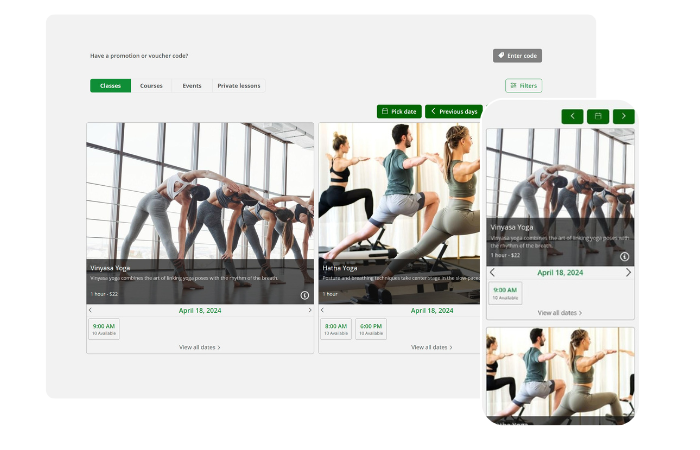
Students without smartphones can use the platform’s in-store kiosk to complete forms. They find their booking by surname, email, or booking number, showing appointments that start within a specific timeframe. Valid signed waivers are automatically linked to new bookings.
Larger yoga classes benefit from Bookeo’s QR codes. Students scan these with their phones, search for a booking, and sign their waiver.
Staff get instant notifications when waivers are signed. Digital copies go to both customers and instructors. Students receive email reminders to complete their yoga liability waiver before class.
Bookeo goes beyond simple features with flexible signature options. Students can use finger signing, digital pens, or font-generated signatures.
Waivers vs Insurance: Why You Need Both
Yoga waivers protect you legally, but they won’t save you from financial stress when someone sues you. Smart yoga teachers know this and use both liability waivers and insurance to stay protected.
How insurance complements a waiver
Liability waivers help reduce your legal risk, but they can’t stop anyone from taking you to court. Your insurance kicks in to handle the costs when legal issues arise. A perfect waiver might exist, but you’ll still need money to defend yourself in court. The costs add up fast, no matter who wins the case.
Insurance takes care of the money problems that waivers can’t touch. Yes, it is a smart move that shows your students you care about their safety.
What insurance covers that waivers don’t
We focused on these key insurance benefits that waivers can’t match:
- Legal defense costs – Your insurance pays attorney fees, court costs, and other expenses if someone sues you
- Medical bills – Insurance helps pay for student treatment after class injuries
- Property damage – You get coverage for damaged studio equipment or facilities
- Personal injury claims – Protection when someone claims negligence or wrong instruction
Professional yoga insurance has sections for general liability (like slip and fall accidents) and professional liability (wrong teaching or adjustment claims). You should get USD 2 million coverage per incident and USD 3 million annual combined.

Occurrence form coverage works best because it protects you from incidents during your policy period, even if claims show up later.
Conclusion
Your yoga business needs more than great teaching skills to stay protected. A complete yoga liability waiver acts as your first defense against legal problems. Many yoga instructors still teach without proper protection – like doing handstands without a safety net.
A good yoga waiver tells students about risks while creating a legal agreement that protects you from ordinary negligence claims. Waivers can’t guarantee protection against all claims, but they substantially reduce your risks when combined with proper insurance coverage.
Note that generic templates won’t give you enough protection. You should work with a legal professional to customize your waiver based on your teaching style, location, and services. Your waiver must clearly describe activities, acknowledge risks, include voluntary participation clauses, and have proper signature fields. The legal strength of waivers increases when you collect them before students start participating.
Digital waiver management has revolutionized how yoga teachers handle these important documents. Paper forms are giving way to online systems that save time and improve organization. Bookeo proves to be an excellent solution for yoga studios by merging waiver collection with your booking process. Students can fill out forms before they arrive, which speeds up check-in. You’ll have secure digital records available whenever needed.
The best protection strategy uses both waivers and insurance together. Waivers help prevent lawsuits, while insurance covers what waivers can’t – legal fees, settlements, and other costs that might come up despite your best efforts.
Your focus should stay on teaching yoga, and proper legal protection makes this possible. Taking action today creates peace of mind tomorrow. Review your current waiver setup, talk to a lawyer about making it better, and set up a digital system like Bookeo to collect waivers easily. You’ll feel more relaxed knowing your practice has both legal and financial protection as you guide students on their yoga path.