How to Reduce Salon No-Shows: Proven Strategies That Actually Work
You might be surprised to learn that 62% of salon no-shows happen because clients simply forget their appointments.
These missed bookings hit salons hard financially. The beauty industry loses about 30% of appointments yearly, and the average salon’s revenue drops by $67,000. Your business’s survival and growth depend on reducing these no-shows.
Here’s the bright side – a few simple changes can make a huge difference. Clients who book online are 49% less likely to miss appointments compared to phone or in-person bookings. On top of that, online appointment reminders cut no-shows by 29%. Better yet, asking for a small booking deposit slashes these rates by 65%!
Let me walk you through proven strategies that help minimize missed appointments. We’ll explore why clients skip bookings, set up effective policies, and use technology to protect your schedule and profits.
Understand Why Clients Miss Appointments
Are empty chairs and lost revenue causing you frustration? You need to understand why clients miss appointments to reduce salon no-shows. Most missed appointments happen because of specific reasons that you can identify.
Track patterns in no-show behavior
You must analyze why no-shows occur to tackle them effectively. Research shows that clients forget their appointments 28.4% of the time. Last-minute issues like traffic or canceled childcare cause 27.6% of missed appointments. Here are other common reasons:
- Forgetting to cancel (10.7%)
- Being unable to cancel (9%)
- Changing their mind (7.5%)
- Lack of money (6.9%)
- Transportation difficulties (4%)
Your data collection should focus on missed appointments. Take note of services with more no-shows, problematic days or times, and client types who miss appointments often. These patterns help create targeted solutions instead of generic fixes.
“You can’t improve what you don’t measure” rings true in salon management. Tracking no-shows reveals surprising patterns. Monday morning appointments might go unfilled, or new clients might miss bookings more than regulars.
Identify high-risk time slots and clients
Patterns will emerge after analyzing your data. Some time slots see higher no-show rates. This identification matters even more in high-end salons – a missed microblading session worth $500 or a $300 facial can disrupt your weekly income substantially.
Watch out for these risk factors:
- Days or times with higher no-show rates
- Services with higher abandonment rates
- New clients who miss appointments more often
- Appointments scheduled far ahead
These insights let you create targeted strategies. Your scheduling approach might need adjustment if 8am Monday clients rarely show up.
Use client notes to flag repeat offenders
Most clients miss appointments once due to forgetfulness or real emergencies. Yet some make it a habit. These chronic no-shows need extra attention.
Your team should prioritize following up with unreliable clients on busy days or when short-staffed. Client profiles should include reliability notes to keep everyone informed.
No-shows transform from random frustrations into manageable patterns when you understand their causes and track them systematically. This knowledge helps you create effective strategies to reduce missed appointments.
Create a Clear No-Show and Cancelation Policy
Your salon needs a clear policy to protect against revenue loss. A well-laid-out no-show and cancelation policy helps reduce missed appointments and builds positive client relationships.
What to include in your policy
Your salon’s cancelation policy needs these vital components to work:
Cancelation timeframe: Most salons find a 24-hour notice period works best for standard services. You might want to think over extending this to 48 hours for high-ticket services like balayage, extensions, or chemical treatments that block much of your schedule.
Fee structure: The policy should spell out what happens with late cancelations and no-shows. Popular approaches include:
- Charging 50% of the service cost for late cancelations
- Charging 100% for no-shows without notice
- Using a flat fee (like $25) for cancelations
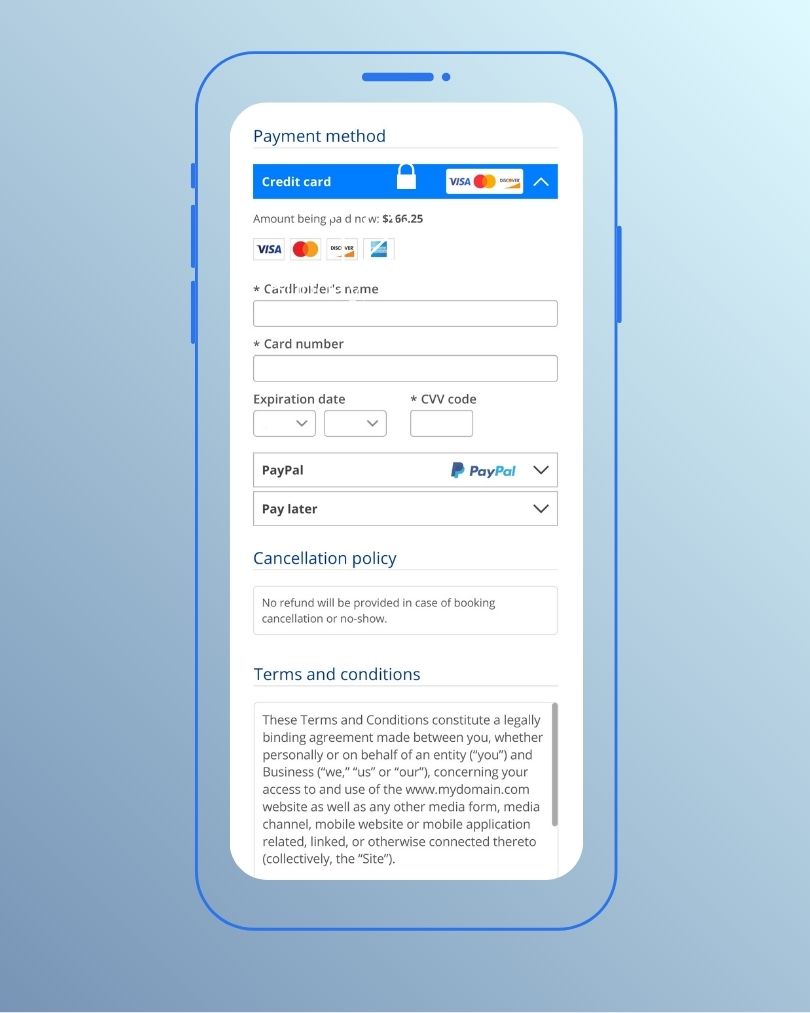
Deposit requirements: You can reduce missed appointments by asking for deposits, especially for high-value services or clients who have missed before. Make it clear whether deposits are:
- A percentage of the service cost
- Applied to the final service price
- Non-refundable if policy is violated
Late arrival policy: Let clients know their grace period before their appointment becomes a no-show. Many salons give a 15-minute window. The policy should state whether late clients can get full service or need to reschedule.
Special circumstances: The policy doesn’t need every exception, but you might note cases like emergencies or illness.
Your message should be firm yet friendly to protect your time and keep client trust. Balance clear consequences without sounding harsh or unwelcoming.
How to communicate it to clients
Clients need to know your policy. Use multiple channels to spread the word:
Display prominently: Put your cancelation policy on your website, booking page, social media profiles, and reception desk. This creates natural touchpoints for clients to see your rules.
Confirmation messages: Add policy details in automated appointment confirmations and reminders. These messages remind clients about your expectations.
Verbal confirmation: New clients booking by phone should hear a brief mention of your cancelation policy. Personal communication reinforces written notices.
Booking process: Clients should acknowledge your policy during booking, whether online or in person. This builds accountability and cuts down misunderstandings.
Staff training: The core team should explain the policy without hesitation. The rules work best when everyone enforces them.
Examples of effective salon policies
Salons of different sizes might need different approaches:
Small salon example: “We understand schedules change, but to respect our stylists’ time, we kindly request 24 hours’ notice for cancelations. Last-minute cancelations (under 24 hours) will incur a 50% service charge. No-shows will be charged the full service amount. Thank you for helping us run smoothly for everyone.”
Medium salon example: “For all bookings, we require a minimum of 48 hours’ notice for cancelations or rescheduling. Cancelations made within 48 hours will result in a 50% charge. No-shows will be charged 100% of the service cost. We value your time and appreciate your cooperation.”
High-end service policy: “For all color and chemical services, we require 48-hour notice to cancel or reschedule. These sessions require significant time blocks, and late cancelations make it difficult for our stylists to fill the spot. Late cancelations will be charged 50% of the service; no-shows will be charged in full.”
A smart cancelation policy protects your business and sets clear expectations with clients. This helps you manage your schedule better and creates an improved salon experience for everyone.
Use Appointment Reminders to Reduce No-Show Rates
A single missed appointment can cost salons $527 on average per visit. When clients don’t show up just once a week, yearly losses can reach $27,404. The right appointment reminders are your best defense against these expensive schedule gaps.

SMS vs. email reminders
Text messages really deliver – they can cut no-shows by up to 38%. People read 98% of their texts, usually within 90 seconds, which makes SMS perfect for urgent messages.
SMS reminders work best for:
- Same-day and last-minute alerts
- Urgent messages that need immediate attention
Just remember the 160-character limit and keep your messages short and clear.
Email reminders get opened about 68% of the time. They might not be as quick as texts, but you can include more details like prep instructions or style ideas. These work great as early reminders, about 48-72 hours before appointments.
Many salons get the best results by using both. One salon expert explains, “SMS is great for last-minute nudges, while emails can include details like prep instructions or cancelation links”.
Best timing for sending reminders
The right timing makes reminders work better. Studies show that sending reminders 24-48 hours before an appointment hits the sweet spot. This gives clients enough time to adjust their plans without causing last-minute stress.
A smart multi-step approach works like this:
- Right after booking: Send all details in a confirmation email
- 24-48 hours before: Send your main reminder (SMS works best)
- 2-3 hours before: Add a quick text for appointments that might be risky

Longer services like multi-hour color treatments need reminders 48 hours ahead, plus a same-day check-in. Quick services like eyebrow threading can do fine with just 24-hour notices.
Messages sent Tuesday through Thursday get 15-20% more responses than weekend reminders. Morning messages around 9 AM catch people’s attention best since they fit into most people’s daily routines.
Automating reminders with salon software
Staff usually spend about 45 minutes each day making reminder calls, often just leaving voicemails. Automation saves time and works even better.
Good automated systems let you:
- Choose when to send multiple reminders
- Create personal messages based on client’s history and service
- See who’s confirmed and who wants to reschedule
- Send messages through different channels naturally
Salons that switch to automated reminders see 30-50% fewer no-shows in just one month. Staff also get back 5+ hours each week that they used to spend making calls.
A good reminder system creates a reliable way to stay in touch that makes your salon look professional and friendly. Clients love the organization, and this builds their loyalty over time.
Require Deposits or Card-on-File for Bookings
Salons lose money when clients don’t show up. Statistics show that one in ten appointments ends up canceled or missed, which can cost thousands of dollars each year. You can protect your business by setting up reminders and policies, but keeping cards on file and asking for deposits are your best defense against lost revenue.
Why deposits work
Money talks. When clients put down a deposit, they’re much more likely to show up. Research shows salons that ask for full deposits see 29% fewer missed appointments compared to those that don’t. Clients who pay upfront are nowhere near as likely to forget their appointment or cancel without thinking twice.
Deposits do more than just prevent no-shows:
- Immediate revenue stream: Getting paid upfront helps your cash flow and makes daily operations run smoother
- Increased spending: Clients who pay deposits spend 2% more overall and 9% more on retail products because their final bill looks smaller
- Professional image: Asking for deposits shows your time is valuable and your business is in demand
- Reduced time wasters: A salon owner puts it best: “Adding a small barrier to booking keeps the time wasters away from your business”
Keeping cards on file works like deposits but without the upfront payment. These systems let you safely store payment details to charge if someone breaks your policies. They’re insurance against no-shows rather than advance payment.
How much to charge
The sweet spot for deposits is tricky – you want enough to stop no-shows but not so much that people won’t book. Salons usually pick one of two ways:
Percentage-based deposits usually run 20-50% of what the service costs. This feels fair because it changes with the price of each treatment. A 50% deposit makes sense for pricey services – it protects you from big losses while staying reasonable for clients.
Flat-rate deposits mean one set price, no matter what service you book, usually $20-100. Many stylists keep it simple with a $50 flat rate for everything. This works best when your services cost about the same amoun,t and makes booking easier.
New to deposits? Here are some ways to start:
- Start with high-value services only
- Ask new clients for deposits
- Use deposits for busy times/days
- Only require deposits from clients who’ve missed before
Legal tips: deposit vs. booking fee
There’s a big difference between deposits and fees that you should know about:
A deposit counts toward the final service cost. When clients show up, you subtract it from their total bill. The law says deposits must be reasonable and clearly explained when booking.
A booking fee is extra money just to reserve the time slot, whether clients show up or not. These face tougher legal rules since they’re an additional charge.
Stay on the right side of the law:
- Put your deposit terms in writing before taking payment
- Make it clear if deposits are non-refundable
- Give reasonable cancelation windows (usually 24-48 hours)
- Keep deposits in line with service costs
- Check your state laws since rules vary
You can charge appointment deposits legally as long as you’re upfront about policies and don’t overcharge. Documentation is key – get clients to agree to your terms when booking, preferably with electronic consent that’s time-stamped and saved.
Implement a Late Cancelation Policy
Late cancelations hurt your salon business just as much as no-shows. A client might give you some notice, but you won’t have enough time to fill that slot. You need a solid late cancelation policy to tackle this problem.
Set a minimum notice period
The right timeframe lets you fill empty slots while being fair to your clients. A 24-hour notice period works best for most salons. You might want to extend this to 48 hours for specialized services like color treatments or chemical procedures. These services take up big chunks of your schedule, and last-minute cancelations can get pricey.
Here’s what to think about when picking your notice period:
- The typical advance booking time for your salon
- How fast you can fill an empty slot
- The duration and value of different services
- Your salon’s overall demand level
Your cancelation window should flex enough for real emergencies but protect your business too. Many salons keep track of repeated violations to spot patterns and stop policy abuse.
Charge partial fees for late changes
A structured fee system makes clients respect your time more. The industry standard usually falls between these approaches:
- 50% charge for late cancelations (those made within your minimum notice period)
- 100% charge for complete no-shows without any notification
- Flat fee approach (like $25) whatever the service cost
You might waive the fee for first-time offenders or loyal clients as a goodwill gesture. All the same, having this policy helps set clear expectations. One industry expert puts it well: “When you trade time for money, we have to make sure that time booked is money delivered even if the client cancels at the last minute”.
The most important thing is to apply your fee structure consistently. Document any exceptions to stay credible with your team and clients.
Prevent last-minute rescheduling abuse
Salon clients have found a new trick – they reschedule appointments at the last minute instead of canceling to avoid fees. This creates the same headaches as no-shows because you still end up with empty slots.
Here’s how to handle this:
- Set a clear cut-off time for rescheduling appointments (matching your cancelation window)
- Watch out for clients who always reschedule with little notice
- Ask for minimum notice for changes (like 24 hours)
A good approach to rescheduling policy looks like this: “Similar to a no-show policy, the terms and conditions of this are entirely up to your salon but could include a cut-off time for rescheduling appointments, a fee for rescheduling appointments, or the ability to only reschedule appointments if the salon is called in advance”.
Modern salon software lets you set minimum cancelation notice periods that block online self-rescheduling too close to appointment times. This makes clients call you directly for last-minute changes, giving you a chance to explain your policy.
Note that each salon’s needs are different based on their clients, services, and demand levels. Your late cancelation policy should fit your specific business while making it clear that “your hourly slots operate similarly to the seats on an airplane, they are limited, in demand, and once that plane has taken off, that seat can’t be resold again”.
Leverage Online Booking Software Like Bookeo
Modern salons that use online booking systems see an immediate effect on their bottom line. Approximately 70% of salon clients now prefer booking appointments online instead of calling in. This creates a great chance to cut down on no-shows through technology.
Benefits of using online booking tools
Online booking systems have changed how clients interact with your salon. They eliminate the phone tag game that leads to missed appointments. Clients can book at any time, even after hours, and they’re more likely to show up for appointments they’ve picked themselves. 29% of first-time guests book their first appointment online, usually during times when salons are closed.
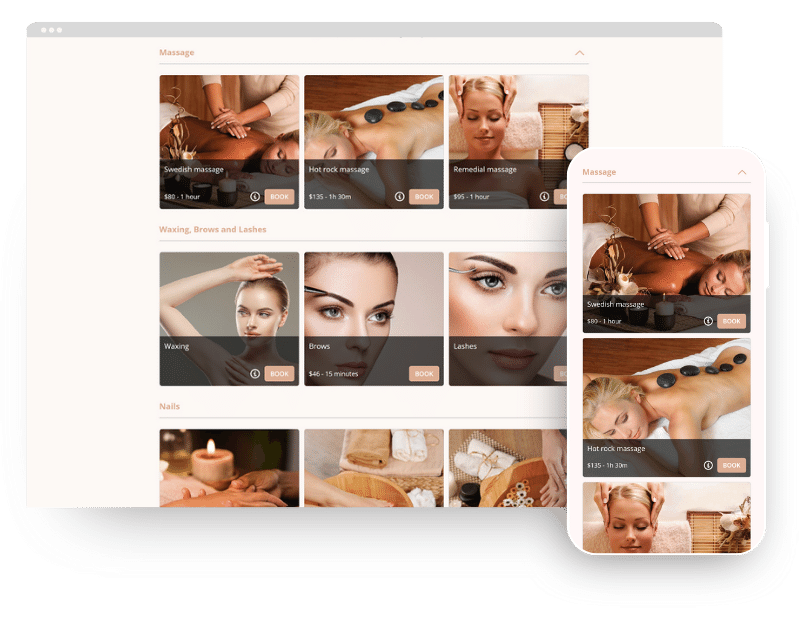
Clients stick to online booking once they try it. After their first digital booking, 58% of customers use only online booking for future appointments. These reliable booking patterns mean fewer mix-ups and missed appointments.
Online booking systems give you practical advantages:
- Immediate schedule updates prevent double bookings
- Clients can cancel or reschedule with a few clicks, cutting down no-shows
- Confirmation emails provide documented appointment proof
- User-friendly mobile interfaces work well for the 70% of bookings made on phones
Better yet, clients who book online visit one more time per year or book their next appointment about 10 days sooner than those who book by phone.
How Bookeo helps reduce salon no-shows
Bookeo’s salon scheduling software tackles the biggest problems behind salon no-shows. Clients can log into their account to cancel or reschedule appointments with just a few clicks, making them nowhere near as likely to skip appointments. This self-service approach lets clients take control while protecting your schedule.
The platform’s booking process lets clients pick their preferred stylist, set up recurring appointments, and handle all their salon needs digitally. This flexibility is linked to better appointment attendance since clients feel more invested in appointments they set up themselves.
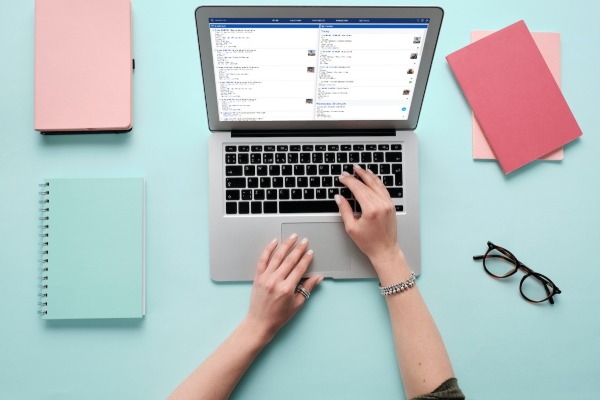
Salons using online booking software report up to 40% fewer no-shows compared to old-school booking methods. This huge improvement comes from mixing client convenience with accountability features.
Features like automated reminders and deposits
Bookeo’s automated reminder system tackles forgetfulness, the main reason for no-shows. The platform sends booking confirmations right away, followed by custom reminders through email or SMS before the appointment. These timely nudges help busy clients remember their appointments.
Bookeo works with multiple payment processors for higher-risk appointments or premium services. Asking for prepayment cuts down casual no-shows, clients rarely forget appointments they’ve already paid for.
The whole system works naturally together: online booking takes appointments 24/7, automated reminders keep clients in the loop, and prepayment options lock in their commitment. This complete approach handles just about every major cause of no-shows we discussed earlier.
Use social media to fill last-minute slots
Quick action matters when clients cancel. Social media helps you reach people who want same-day services fast:
Share your open slots right away with booking links or QR codes that take followers straight to your calendar. This way, followers can become clients in minutes.

Special deals work great with last-minute openings. A salon owner found that some money beats no money, and new customers get these deals, so regular clients don’t feel left out.
Your posts can reach more people through local Facebook groups or neighborhood pages. Add your location, salon name, and service type to catch nearby clients’ attention. A salon in New Zealand posted about a last-minute waxing slot and filled it almost right away.
Train Your Team to Handle No-Shows Professionally
Your team plays a significant role in managing no-shows. The right training can turn missed appointments into chances to improve your business.
Scripts for client follow-ups
The best time to reach out to clients is within 24 hours of their missed appointment. Your messages should be brief and straightforward without making clients feel guilty. A professional message could be:
- “Hi [Name], we noticed you missed your [specific service] appointment at [exact time]. Just checking if everything is okay and if you’d like to reschedule.”
- “Hello [Name], this is [Your Name] from [Salon Name]. We had you scheduled for [service] today at [time], but didn’t see you. Please let us know if you’d like to rebook.”
Recording all client interactions about policy enforcement helps you stay accountable and provides useful reference points.
Balancing empathy with enforcement
The core team needs to share policy information with confidence and understanding. Practice sessions with role-playing help prepare staff for different client responses. Industry professionals state that “Balancing policy enforcement with flexibility is key, as certain situations call for understanding while others call for stricter action”.
Your team should state facts clearly without apologizing for existing policies. These policies protect your business – communicate this with confidence.
Keeping staff morale high
No-shows affect your team’s motivation directly. One source points out that “When no-shows begin to pile up, it can directly affect your salon team members’ morale. Imagine how disappointed and demotivated a stylist may feel after preparing for a particular service, only for the client to not show up”.

Your business needs strategies to handle tense situations professionally. Teaching conflict resolution skills creates a unified approach to policy exceptions. Yes, it is through consistent policy enforcement that “teaches clients to respect your booking process and enables your team to feel their boundaries are protected”.
Note that your frontline staff can reduce no-show rates through clear communication, empathy, and professionalism.
Conclusion
Salon no-shows drain about $67,000 from the average salon’s annual revenue. This is a tough challenge, but budget-friendly solutions can boost your bottom line dramatically. This piece explores several proven ways to minimize these gaps in your schedule that get pricey.
You need to understand why clients miss appointments to tackle this issue effectively. Data tracking reveals patterns, high-risk time slots, and repeat offenders. These insights create a foundation to build targeted solutions.
A clear cancelation policy sets proper expectations right from the start. Your policy should strike a balance between being firm yet fair. It needs to outline specific timeframes, fees, and deposit requirements while staying transparent about what it all means.
SMS messages have become the most powerful tool against forgetfulness – the biggest reason behind no-shows. These texts boast a 98% open rate. When combined with detailed email confirmations, they create a reminder system that keeps appointments fresh in your clients’ minds.
Deposits and card-on-file requirements serve as strong deterrents. Salons report a 29% drop in missed appointments after setting up deposit systems. This works because clients rarely forget appointments they’ve already paid for.
Late cancelation policies target last-minute changes that create unfillable gaps. Setting clear notice periods – usually 24-48 hours – and appropriate fees discourages this behavior and protects your schedule.
Online appointment scheduling systems like Bookeo provide a complete solution that pairs convenience with accountability. Clients who book online show more commitment to their appointments. Features such as automated reminders and prepayment options address the main reasons behind no-shows.
Quick social media posts about last-minute openings can fill these gaps fast, especially with limited-time offers attached.
Staff training rounds out your no-show strategy. Your team needs clear scripts, conflict resolution skills, and consistent policy enforcement. This helps them handle missed appointments professionally while staying positive.
Note that these strategies work best when used together. Start with methods that target your specific no-show patterns, then add more techniques as needed. Small changes often bring big results – online appointment reminders alone can cut no-shows by 29%.
These practical strategies, when applied consistently, protect your schedule and improve cash flow while building a more reliable, respectful client base. The end result? Your salon thrives and empty chairs become rare.