
How to Get Leads for My Business: A Step-by-Step Guide for Service Companies
You’re not alone if you wonder how to get leads for your business without burning through your budget.
Lead generation turns strangers into interested prospects. This matters even more for service businesses. More leads mean more customers, more sales, and more revenue.
Here’s the good news: 50 percent of marketers reported higher conversion rates after they started using lead magnets.
This piece will show you exactly how to generate leads for your service business. You’ll learn to build your online foundation and implement booking systems that convert browsers into paying clients.
What Is Lead Generation for Service Companies
Lead generation is the process of attracting and converting possible future customers into actual paying customers. Service companies need to fill their pipeline with people who need what they offer and are ready to take action.
Service businesses face a challenge that product companies don’t: you can’t just list features and wait for orders. You’re selling expertise, reliability, and trust—things people can’t see or touch before they commit. Your potential clients need to believe you’ll solve their problem before they even pick up the phone.
The difference between service businesses that struggle and those that thrive often comes down to lead generation for service business strategies. You need a steady stream of qualified prospects who are ready to buy, not tire-kickers who vanish after the first quote.
Why Service Businesses Need a Different Approach
Service selling requires patience and emotional intelligence. You can’t hold a service in your hand or test-drive it in the same way. You’re asking buyers to take a leap of faith: trusting in your people, your process, and your promises.
Products sell certainty. Services sell belief. This fundamental difference changes everything about how to generate leads.
Conveying intangible value is harder. Clients can’t ‘see’ the service, so it takes longer to establish trust or justify its pricing and value. Your positioning must make intangible benefits feel tangible and reduce perceived risk.

Successful service sellers lean on different approaches. You need to diagnose before you prescribe. Uncover the underlying problems, the emotional drivers, and the real cost of inaction before discussing solutions. You’re not selling your resume. Clients want confidence that your team will make their life easier, their business smoother, or their outcomes better.
Trust in services transfers through narrative. Case studies, testimonials, and referrals serve as tangible proof that helps buyers feel safe investing in something they can’t see. Service selling becomes a slower burn, but once you win, you build relationships that last for years, not transactions that end at delivery.
Pricing for service businesses varies depending on the specific industry, the experience of those operating the business, and the amount of time it takes to complete the service. You’re selling your time and expertise, unlike products with fixed costs.
The Difference Between Service and Product Lead Generation
Services are intangible and variable. They’re often produced and consumed at the same time and cannot be inspected or tried out in advance. The quality of a service can vary with who delivers it and under what conditions.
Traditional product marketing relies on the 4 P’s: Product, Price, Place, and Promotion. Service marketing extends this to 7 P’s, adding People, Process, and Physical Evidence. These additional elements acknowledge that service business lead generation requires showcasing the humans behind the work, the systems that guarantee results, and evidence of past success.
Take the case of buyer trip length. Product-focused marketing wants to minimize the trip and remove barriers. Service-oriented marketing accepts a longer trip with multiple touchpoints to build the trust needed and demonstrate value. Potential customers often first encounter your business through educational content, then may use a free tool or attend a consultation, moving through considerable involvement before they’re ready to commit.
Service messaging must answer a different question than product messaging. ‘Whom can I trust to deliver the results I need, and what experience will I get?’. This focuses on highlighting the quality, expertise, and outcomes associated with the service.
The buyer assumes most of the risk in product sales. If it doesn’t work, they can replace it. You share that risk in service sales. Your reputation is on the line every day. Services require more proactive communication, tighter arrangement, and continuous trust-building, so your lead generation strategy must reflect this reality.
Service businesses need to build trusting relationships with customers and customize them as needed. Marketing services versus products requires this personal touch from the very first interaction.
Understanding Your Target Audience
You need to know exactly who you’re talking to before you can figure out how to get leads for your business. Casting a wide net wastes time and money. You’re not trying to attract everyone. You’re trying to attract the right people who will buy from you, stay loyal, and refer others.

Getting specific about your target audience transforms how you generate leads from guesswork into strategy. Service business lead generation depends on knowing who needs your services most and where to find them.
Identify Your Ideal Client Profile
An Ideal Client Profile describes the type of customer who finds the perfect solution to their problems in what you offer. Think of it as a detailed portrait of your dream client.
An ICP helps you prioritize prospects who are most likely to convert, stay loyal, and generate long-term revenue. Your sales pipeline fills with higher-quality prospects that are more likely to buy instead of chasing every possible lead. They experience value sooner and are less likely to leave when your service fits your customers’ needs well.
Building an ICP for lead generation for a service business requires analyzing several key components:
- Demographics: Age, gender, education level, occupation, and your target audience’s income
- Geographic: Physical location, narrowed to neighborhoods or districts
- Psychographic: Values, interests, attitudes, lifestyles, motivations, and behaviors based on personality traits and goals
- Behavioral: Customer actions and patterns, which have purchasing habits, brand loyalty, product usage, and engagement levels
- Technographic: The technology stack your target audience uses, which has software, hardware, and digital tools
- Firmographic: Company size, industry, revenue, number of employees, and growth potential for B2B services
Creating detailed ICPs helps you understand what customers want and value most. You can tailor your services to better meet customer expectations by identifying these priorities.
The biggest advantage of an ICP is having a detailed vision of who’s going to use your service. You spend more time with people who already find value in what you offer and have interest in buying it with an ICP narrowing down the wide field of prospects. ICPs help you identify which types of customers to analyze for behavioral and demographic insights. This allows you to tailor your messaging and pitches to appeal to specific customer pain points.
73 percent of people expect better individual-specific experiences from brands for that reason. You can deliver that individual-specific messaging when you understand customer profiles. Loyal customers spend 67 percent more on their favored brands compared to others.
Research Where Your Customers Spend Time
Marketing at its core means getting the right message in front of the right person at the right time and in the right place. You need to know where your ideal clients spend their time online.
Internet users spent six hours and 38 minutes online daily as of the third quarter of 2024. This represents a considerable amount of time you can potentially reach them. More than six in 10 people worldwide used the internet to find information. Communication platforms and online content consumption, such as watching videos, followed closely behind.
Mobile consumption overshadows traditional channels. Consumers are dedicating more time to mobile apps than browsers. Mobile app usage reaches three hours and 28 minutes per day, while browser usage remains at just 52 minutes per day. Your online presence must work naturally on mobile devices for service business lead generation.

Social media plays a role in where customers spend time. Americans devote roughly 30 percent of their online time to social media, predominantly Facebook. Consumers allocate 34 minutes per day to using computers for gaming, leisure, and socializing on average. Consumers double their time socializing online on weekends and dedicate 53 minutes compared to 25 minutes on weekdays.
The more people use social networking sites, the more they shop online. Longtime social media users not only buy more often but also shop from a wider range of retailers. Understanding these patterns helps you determine where to focus your advertising and engagement efforts and how to get more leads for your business.
Analyze Your Current Best Customers
Your existing best customers hold the keys to finding more people like them. Start by analyzing your current best customers who are already revenue-generating, loyal, and likely to make referrals.
Having a powerful customer relationship management system makes it easy to analyze and identify the traits these customers share. Review your current customer base to identify who provides the most value and is a good fit for your services. Identify patterns and shared characteristics among your top customers by reviewing your sales analytics software, CRM data, and lead scoring analytics dashboards.
Which are your most successful accounts? Who are your best customers? Which ones have the greatest customer lifetime value or have been repeat customers? They probably have similarities across characteristics like geography, industry, number of employees, customer base size, revenue and budget, and their existing technology stack if more than one example springs to mind.
Look at the data related to spending, loyalty indicators, and other success metrics. You’re trying to capture whatever traits these customers have that make them your best ones. These top performers unlock the insight you need to replicate the success.
Identify the outcomes your customers want to achieve, whether saving time, reducing costs, or scaling growth. Look at industry reports and trends to identify emerging markets or industries that are growing and may need your service. Ask your best customers direct questions through brief interviews to learn about why they chose your service, what they value most, and what alternative they thought about.
Customer analysis gives an explanation of what your customers want, their priorities, and the features they value most. You identify trends in customer behavior that help you anticipate customer needs and provide individual-specific experiences by analyzing customer data. This analysis helps identify at-risk customers who are likely to leave and allows you to take proactive measures to improve satisfaction and increase retention rates.
Build Your Online Foundation
Your online presence determines whether prospects trust you enough to hand over their contact information. A professional website serves as your virtual storefront. Service companies often find this is the first place potential clients assess whether you’re worth their time and money.
Create a Professional Website
Your website has one job: turn visitors into guides. Nearly 75 percent of small businesses have websites, though having one isn’t enough to stand out. Your homepage acts as the virtual lobby of your business, the first thing people notice when they visit. You have less than 10 seconds to convey your value proposition.

Service businesses need websites that speak to client needs. Get to the point about what your business does. Keep words concise and compelling. Hook visitors and get them to explore deeper into your site. Your contact page should include your email address, phone number, physical address, hours of operation, and social media channels. Embed an interactive map if your business gets foot traffic so visitors don’t get lost.
Website conversion elements encourage visitors to take action. Sign up for updates or schedule a consultation. Structure your website around the goal of turning visitors into guides, from text and images to design layout. Every page on your website should have a clear next step.
Set Up Lead Capture Forms
Lead capture forms collect contact information from website visitors in exchange for something valuable. Someone completes a form and gets added to your CRM. You can nurture them with personalized messaging.
Forms that connect to your CRM streamline the guide generation process for service businesses. Everyone who fills out your form will be routed into your system. You can enroll them into guide nurture campaigns or route them to your sales team.
Keep things short when you create forms. Shorter forms have much higher conversion rates than longer forms. Ask for essential information. Remove unnecessary form fields and keep it to a single page if you can, since 26 percent of users abandon transactions because the process is too long or complicated.
Position your form with strategy. You can place it beside the landing page, within the landing page, in a chatbot, or at the bottom of an auto-scroll landing page. Include a privacy policy if you’re asking people for personal information. This shows visitors that their information is safe and secure.
Add Clear Calls to Action
A call to action asks your audience to do something specific. CTAs are the final step that moves people from just looking to taking real action on your page. Your CTA needs to stand out on the page through strategic placement and smart design.
Make each CTA action-oriented. Specific action phrases like ‘request a quote’ are much more compelling than vague language like ‘learn more’. Use strong verbs that encourage users to act: Get, Start, Join, or Create. People want to know what they’re getting into, so tell them what happens after the click.
Focus on one main CTA per page. Data shows that a single, clear action improves conversion rates. Position your primary CTA near the top of the page and make it easy to find throughout your site. Then visitors should be able to see these CTAs without scrolling.
Include Social Proof and Testimonials
Consumer trust is priceless. Buyers are more likely to make a purchase decision after reading a trusted review at various stages of the purchase funnel. Service businesses ask web visitors to trust you with their vehicle or invite a stranger into their home by booking your services.

Social proof tools help organizations convert more buyers on pages or generate new sales guides through branded websites. Place a ‘What our customers are saying’ section near the top of your website to build credibility. Add specific reviews or ‘Verified Buyer’ badges right next to action buttons to reduce last-minute hesitation.
Keep testimonials concise and authentic. A short but meaningful quote from a respected client can do more to sway a prospect’s opinion than pages of self-promotional copy. Don’t limit testimonials to just one dedicated page. Sprinkle them throughout your website, near call-to-action buttons.
How to Generate Leads Through Local SEO
Local SEO puts your service business in front of customers who search for what you provide in your area. Search intent for local queries runs high. People looking for “plumber near me” or “electrician in Houston” want to hire someone now, not browse options for weeks.
Claim Your Google Business Profile
Your Google Business Profile is your most powerful local SEO asset. Google has turned GBP into a fully-fledged AI-powered platform that rewards businesses behaving like real and active operations by 2026.
Setting up your profile takes more than filling out boxes. Complete all information, including your business name, address, phone number, website, and a detailed description that focuses on local terms. Choose your main service category with precision since it carries the most algorithmic weight.
Upload high-quality geo-tagged images on a regular basis. Include before and after photos if you’re in trades or home services. Publish GBP posts every week, whether it’s a special promotion, service highlight, or seasonal content, just to keep your profile looking alive in Google’s eyes. Turn on messaging and booking links so you can capture interest straight from your profile.
Define your service area with precision. A larger radius than you can serve creates mismatched signals and risks profile credibility issues. A plumbing company in Manchester committed to weekly GBP posts, responded to every review within 24 hours, and added service-area photos. The result was a 40% increase in profile views within three months without changing anything else.
Get Listed in Local Directories
Local citations are online mentions of your business name, address, and phone number. Consistent and accurate NAP information across all platforms signals to search engines that your business is legitimate and trustworthy.
Start by listing your business in directories like Yelp and Yellow Pages. Make sure the NAP information matches exactly across all listings. Every inconsistency sends a signal of unreliability that suppresses your ranking. Audit your current citations, fix discrepancies and build new listings on high-authority directories relevant to your industry and region.
Encourage Customer Reviews
Reviews build trust with potential clients, signal to Google how you behave, and generate keyword-rich content that proves your relevance. Google cares as much about how fresh your reviews are as they do about quantity.
More than 70% of people read reviews before making a purchase. 87% of consumers use Google to find businesses in their area. Google uses reviews as a ranking factor in local search results, so businesses with many positive reviews appear higher in rankings.
Respond to reviews by thanking customers for positive feedback or addressing concerns in negative ones. Provide a direct link to your Google Business Profile after a successful job so customers can easily leave reviews.
Optimize for Local Keywords
Location-specific keywords signal to search engines that your business is relevant to local searchers. Instead of saying “We provide plumbing services,” say “We provide plumbing services in Montreal”. Include local keywords throughout your website in title tags, alt tags, and copy to help you rank in local search results.
Use Content Marketing to Attract Qualified Leads
Content attracts people who already want what you sell. Helpful information positions your service business as the go-to expert and brings qualified prospects to you instead of making you chase them down.
Start a Blog Answering Customer Questions
Your customers hand you blog topics every single day. Every email, phone call, and conversation reveals what they need to know. These questions create an endless supply of content ideas that matter to your audience when you collect them.

Gather frequently asked questions from your inbox, customer service logs, social media comments, and face-to-face interactions to get started. Google’s “People Also Ask” section shows related questions people actively search for. Online forums and YouTube comments reveal gaps where video content exists but written answers don’t.
Turn each question into a blog post with a simple formula: make the question your headline, answer it in plain language, add examples or tips, then include a call-to-action. This approach builds trust because it shows you understand customer challenges and care about helping. Prospects see you answering real questions and remember you as the helpful authority in your space.
Create Free Guides and Resources
Lead generation depends on giving people a reason to share their contact information. Free guides and downloadable resources work as lead magnets that capture prospect details in exchange for value.
Educational content like how-to guides, checklists, or assessments keeps leads participating while providing data about their priorities. A fitness service might create a quiz helping leads determine their ideal workout routine and collect information to tailor future messaging at the same time. Webinars allow direct customer interaction, such as a consulting firm organizing sessions that showcase their expertise with Q&A at the end.
Email sequences nurture subscribers after they download your resource. An automated welcome series keeps leads participating over time and delivers targeted messages that guide them toward their first purchase.
Share Case Studies and Success Stories
Proof matters more than promises. Case studies demonstrate the practical value of your service through real results and make them powerful tools to attract attention and build trust.
Seventy-three percent of successful content marketers use case studies as part of their strategy. Buyers spend 54% of their time reviewing case studies before making purchasing decisions. This means prospects need to see evidence you deliver on your claims when it comes to service business lead generation.
Structure case studies around customer challenges, how your service addressed them, and quantifiable results achieved. Include specific metrics like increased revenue, improved performance, or time saved. Analytical content sparks curiosity and compels readers to learn how you achieved those numbers. Case studies with videos show an 87% increase in sales, making multimedia formats worth the extra effort.
Leverage Social Media and Online Platforms
Social platforms put your service business in front of people already talking about what you do. Distribution matters as much as creation, and this is where prospects find you.
Choose the Right Platforms for Your Service
Platform selection starts with knowing where your audience spends time. LinkedIn houses more than 575 million professionals, including 2.8 million decision makers, if you’re targeting business clients. Cost per lead runs 28% lower than Google AdWords. This makes it especially effective for B2B service business lead generation.
Facebook reaches 2.9 billion monthly active users, with 71% of U.S. adults using it regularly. This broad reach works in your favor for service businesses targeting homeowners or local consumers. Instagram and Pinterest suit visually-driven services like landscaping or interior design.
Don’t spread yourself thin. Survey your existing customers to understand their platform priorities. Focus on one or two channels where your ideal clients participate, then expand once you’ve built momentum.
Engage with Your Local Community
Location tags help nearby customers find your content. Tag your business location in posts and encourage clients to do the same at the time they share their experiences. This user-generated content provides authentic proof of your work while expanding your reach.
Partner with nearby businesses and community organizations. Tag them in relevant posts or use shared content to reach both audiences simultaneously. These interactions strengthen local visibility and often lead to referral relationships.
Run Targeted Ads for Your Service Area
Google Local Services Ads appear at the top of search results for service businesses like plumbers, painters, and HVAC companies. You pay per lead, not per click, which means you only spend money at the time someone contacts you directly. The Google Guarantee badge builds credibility with prospects researching options.
Facebook and Instagram ads allow precise geographic targeting. Set radius-based campaigns around your service area or target specific ZIP codes. Retarget people who visited your website but didn’t book. Deliver educational content that builds trust before asking for the sale.
Implement an Online Booking System
To convert prospects into paying clients, you must remove friction from the booking process. Customers expect instant scheduling options now, and hesitation at this stage costs you revenue.
Why Online Booking Increases Lead Conversion
Post-pandemic shopping behaviors have made customers expect online booking convenience. Weekends and outside business hours see more bookings. Prospects will choose competitors who offer 24/7 scheduling if you still rely on phone-based booking. Online booking eliminates phone tag and reduces response time. It captures leads when interest peaks.
How Bookeo Simplifies Client Acquisition
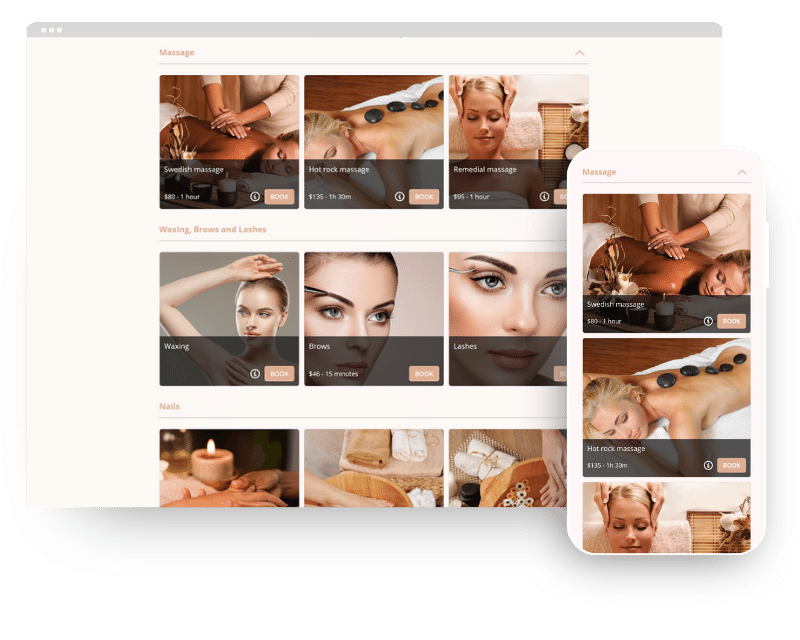
Bookeo’s service business scheduling software starts at $14.95 per month. Its booking widget can be embedded into your website, including WordPress. You can also use Bookeo’s standalone brandable booking page. Paste your booking URL into social profiles, email signatures, or business cards. This captures leads from multiple channels. Customizable booking forms collect customer contact information when they schedule appointments. Bookeo centralizes all customer data in one dashboard.
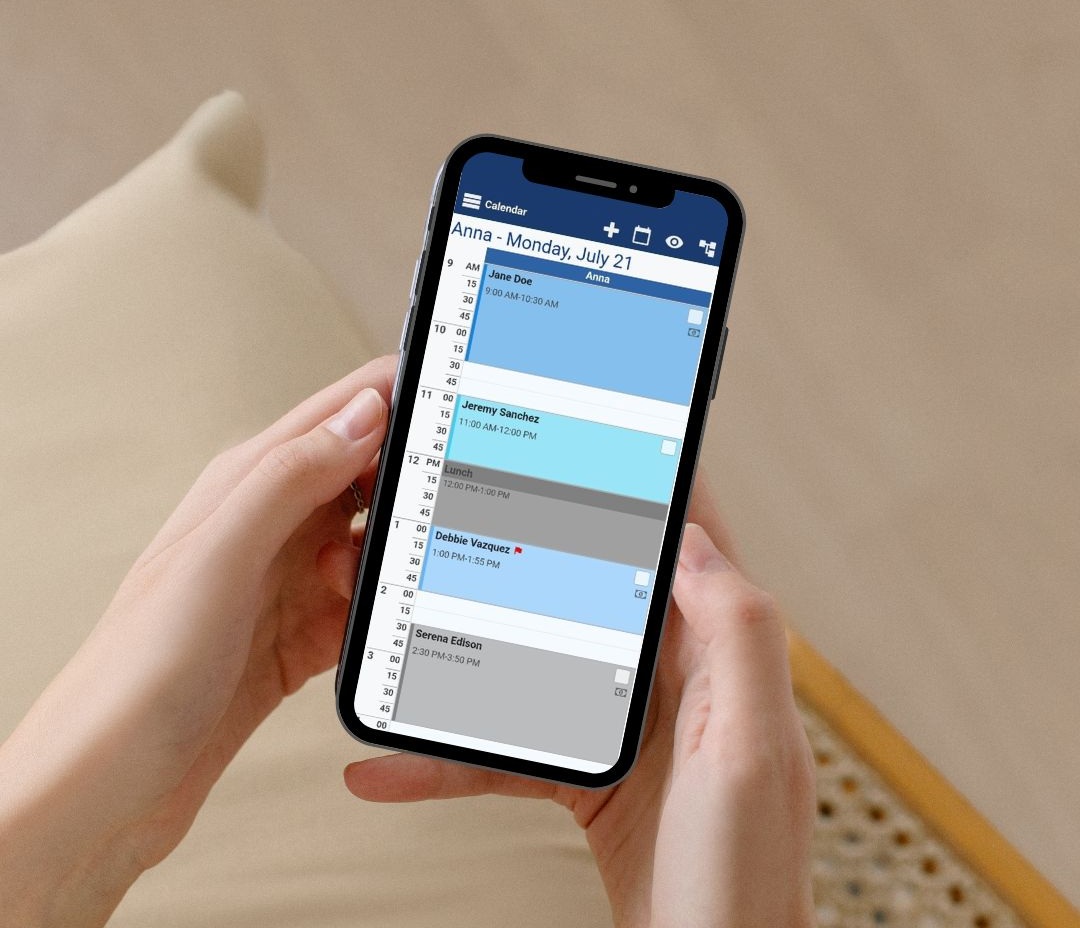
You can monitor client activity and tailor your marketing. You can create prepaid service packages or memberships that deduct credits when customers book.
Reduce No-Shows with Automated Reminders
Automated reminders reduce no-shows by up to 38%. SMS reminders achieve open rates above 90% and outperform email. Bookeo sends follow-up messages, which cuts down on missed appointments while maintaining prospect interest. Businesses using automated reminders report a 38% drop in no-shows within three months.
Track and Measure Your Lead Generation Results
Measuring results reveals which lead generation tactics for service businesses actually do the job. Metrics provide clarity on what needs adjustment and contribute to accountability at the time you allocate your marketing budget.
Set Up Conversion Tracking
You need to track the percentage of leads taking desired actions, such as filling out forms or scheduling appointments. Bookeo’s dashboard centralizes customer data and lets you monitor client activity patterns. You should attach UTM parameters to your call-to-action links, so you know which campaigns bring in leads. UTM parameters include campaign source, campaign medium, and campaign name. You track them by adding a pixel or code to your assets.
Monitor Cost Per Lead
Cost per lead measures how much you spend to acquire a single lead. You can calculate CPL by dividing total campaign cost by the number of leads generated. If a marketing campaign costs $1,000 and generates 200 leads, the CPL is $5. You should monitor this metric to assess cost-effectiveness and identify which channels drain budget without results.
Identify Your Best Lead Sources
You can create reports that find where leads originate. Attribution software doesn’t track all sources, so you need to monitor contact form submissions separately. You should focus on channels that produce the best results and reduce customer acquisition costs. Double down on high-performing channels.
Adjust Your Strategy Based on Data
You need to compare past performance with current results to recognize beneficial changes. If one landing page converts at double the rate of another, you should send more traffic toward it. Reallocate budget from underperforming channels to higher-performing ones.
Conclusion
You now have everything you need to generate qualified leads for your service business. Build your online foundation and optimize local SEO. Implement online booking systems like Bookeo. These strategies work when you apply them with consistency.
The difference between struggling service businesses and thriving ones comes down to systematic lead generation. Start with one or two tactics from this piece and measure your results. Scale what works.
Don’t wait for customers to find you. Take action today. Claim your Google Business Profile and add lead capture forms to your website. Set up automated booking. Your pipeline will fill with qualified prospects ready to buy.
Lead generation takes time. The results compound, though. Stay consistent and track your metrics. Adjust based on data.