

Personal Training Marketing: What Most Trainers Get Wrong About Getting Clients
Personal training marketing separates thriving trainers from the 50% of businesses that fail by year five. Most trainers assume their certifications and skills will attract clients on their own. The personal training industry hit $12 billion in 2024 and continues growing 14% through 2033. Competition for clients has never been fiercer. You need proven personal training marketing strategies, not guesswork. This piece reveals the six biggest mistakes trainers make with marketing, plus useful marketing ideas and techniques that actually book clients consistently.
The biggest myth: believing certification alone brings clients
You finished your certification course. Maybe you passed the exam on your first try. You felt ready to change lives and build a successful fitness business. Then reality hit: certification alone doesn’t book clients.
Why credentials don’t guarantee business success
Most newly certified trainers aren’t ready to handle what the job just needs. A personal training certification rarely prepares someone to work as a professional. The certification industry operates as big business, with no regulation in most parts of the world, allowing anyone to create a course and call a trainer “certified” upon completion. Weekend certifications compete with complete programs that include practical components, yet both produce trainers who can work with clients.
Here’s what certification companies don’t advertise: your clients don’t really care about your credentials. The average client hiring your services has no clue about the certifications offered in the fitness field. Any fitness professional with experience knows that the type of certification rarely affects whether a client hires them.
Your education awards you the right to call yourself a “personal trainer”. That’s where its business value stops. Certification proves you understand anatomy, exercise science, and program design. It doesn’t teach you how to market yourself, stand out from competitors, or convince someone to invest in your services. You’ve learned to be a technician without learning to run a business.
Commercial gyms may require specific certifications for employment access. Certified trainers qualify for professional liability insurance. All the same, these credentials function as entry tickets, not client magnets. 80% of personal trainers quit the industry within their first two years, and most exits are driven by lack of clients.
What actually attracts paying clients
Personality and knowing how to apply your education practically so your clients can understand determine how many clients you get. All the certifications in the world won’t make you successful if you’re shy, don’t communicate well, or people simply don’t like you.
Statistics show that college graduates earn more money than non-college graduates. But in the fitness field, having a college degree doesn’t guarantee you’ll attract more personal training clients. You can become over-educated and under-qualified. Fitness certifications and degrees do not help you make more money as a fitness professional. Getting results and creating an experience people like helps you make more money.

Buying decisions are driven by emotion. Potential clients could be dealing with body image issues, poor health, or recovering from injuries. They just need someone who understands their struggles and communicates confidence without arrogance. They want a relationship, not a resume.
Walk into any gym and the fittest person in the room draws attention. Defined muscles and impressive lifts turn heads. Clients don’t hire you to admire your achievements, though. They hire you to change theirs. They don’t hire the trainer with the most letters after their name. They hire the one who makes them feel understood and capable.
The gap between qualification and client acquisition
The certification curriculum teaches you fitness assessments, anatomy, physiology, kinesiology, and program design. Some programs have started including marketing and business coaching elements, recognizing that trainers need more than technical knowledge to succeed. For the most part, certification prepares you to train, not to attract clients who need training.
You need to know how to market yourself as a personal trainer, how to stand out, how to advertise personal training, and how to sell personal training packages. Getting clients is a learned skill that gets easier with practice. Client acquisition is a sales job, but you have to be seen by someone before you can convince them to hire you.
In fact, many trainers enter the industry with the misperception that showing off their body in the gym and posting videos on social media will attract clients. You won’t become a social media star in most cases. You need a marketing strategy to communicate the benefits of your services to a specific audience.

The fitness profession loses credibility when people work as personal trainers without proper training and credentials. Certification matters for professional standards and client safety. All the same, bridging the gap between qualified trainer and booked calendar requires personal training marketing strategies that most certification programs never address.
Mistake 1: Treating marketing as optional or secondary
Most trainers treat marketing the same way they treat stretching after leg day. They know they should do it. They’ll get to it eventually. Maybe next week.
This mindset kills businesses faster than bad programming kills gains.
Why ‘build it, and they will come’ doesn’t work
You might be the best trainer in your city. You understand program design and behavior change psychology. None of that matters if nobody knows you exist.
Most trainers operate under a false assumption: if they have an amazing product or service, everyone should want it with no questions asked. Just create it, and they will come, so to speak. That’s untrue. A product, good or bad, is only as strong as its marketing. You might be the best trainer in the world and have the best service, but if you don’t tell people about it, how will anyone ever know?
About 20% of small businesses fail in their first year, and 50% fail by year five. Trainers who invest in smart marketing from day one give themselves a huge advantage over those who don’t. Great marketing is what makes a product sell.
Many trainers have had to watch as their businesses struggle for that reason. This happens because most certifying agencies train learners to be excellent personal trainers but discard the business or entrepreneurial aspect of it. You learned to assess movement patterns and design periodized programs. You didn’t learn to market yourself, and that gap between technical skill and business survival costs trainers their careers.
The cost of inconsistent marketing efforts
Marketing without a strategy is like programming without progression. You might see occasional results, but you won’t build anything sustainable.
Trainers often start marketing when their schedule gets light. They post on social media for two weeks, see no immediate results, then stop. They’re starting from zero by the time they realize they need clients again.
Consistency is the key. The more you market yourself, the easier and more rewarding it becomes. A consistent online presence will help you stay at the top of their minds. You’ll be the first person on their list once they decide to work with a personal trainer.

Potential clients find inactive profiles when you abandon marketing efforts. There’s nothing worse than an inactive profile, so don’t be afraid to close an account if it’s not bringing you any value. Inconsistency communicates unreliability. Clients wonder: if you can’t maintain your own marketing, how will you maintain their program?
Inconsistent marketing wastes the effort you already invested, besides damaging your visibility. Email marketing and social media presence build over time. Stop for three months, and you lose momentum.
How successful trainers approach marketing daily
New personal trainers often assume that earning a certification will lead to a flood of clients, but this is rarely the case. Effective personal trainer marketing is what helps even the most qualified professionals stand out.
Successful trainers dedicate time each day to actionable marketing efforts. They don’t wait until their schedule opens up. They treat personal training marketing strategies as non-negotiable business operations, just like client sessions and program design.
These trainers plan and write content in advance so that it can be copied and pasted into their social channels. There’s nothing worse than making something up on the day that doesn’t line up with your overall strategy or ends up being a wasted effort. They reply and involve themselves in the conversation when engagement happens with their posts.
They set aside a block of time each week to review marketing goals. This keeps them accountable and helps them revise strategies based on what’s working. They understand that marketing for personal trainers isn’t about becoming an expert overnight. Gaining clients is a learned skill that gets easier with practice.
The trainers who book clients don’t treat marketing as optional. They recognize that effective personal training marketing strategies are essential to stand out in a competitive fitness industry.
Mistake 2: Trying to serve everyone instead of a specific audience
Every gym member looks like a potential client when bills need paying. New trainers take anyone who’ll sign up. That hustle feels necessary at first, but trying to serve everyone keeps you stuck competing on price instead of value.
The problem with being a generalist
Generalist trainers compete in a crowded market. The current market makes standing out as a generalist tough. You offer the same services as dozens of other trainers in your area. Potential clients see no reason to choose you over someone charging $10 less per session.
Business growth depends on being selective about whom you work with. Think over where things go wrong with an ill-fitting client. You’ll be drained mentally and even physically. The rest of your clients suffer when your lost energy affects the results you deliver. A client’s results aren’t easily achieved, if at all, when a client-trainer relationship isn’t ideal. This damages your fitness business, which depends entirely on producing and replicating results.
Wrong-fit clients waste your time beyond affecting your energy and client outcomes. Time spent with the wrong client keeps you from finding the right one. Your ideal client probably spends time with five people just like her. Clients you don’t mesh with likely hang out with more people you don’t mesh with, which poses a problem to your business growth.
People don’t invest in personal training; they invest in the person who trains them. You need to meet clients where they are, not where you wish them to be. Generalists struggle with this because they lack clarity on who they’re actually speaking to. Your marketing speaks in generalities. Your services feel generic. Nobody sees you as the obvious choice for their specific situation.
How to identify your ideal client profile
An ideal client profile creates a dimensional picture of a real person rather than a list of traits. This specificity sharpens your positioning and increases the likelihood that clients who say yes are truly your best customers.
Start by looking at your current and past clients. Pick out the ones that have been your best, or those who were as excited to work with you as you were with them. Put 90 seconds on the timer for each question and identify what each client gained from working with you, what could have been lost if they hadn’t worked with you, and who this client is.
Your ICP should include information relevant to marketing your business. There’s no set format or hard rule. Focus on answering these questions:
- Demographics: age, gender, income, education, profession, children and their ages
- Current pains they’re experiencing because of their fitness or lack thereof
- Fears about fitness and what they think will happen if they don’t start now
- Short-term and long-term goals they want to achieve
- Desires about what their life will look like once they achieve their goals
- Hidden desires they’re afraid to say aloud
- Values they expect in a business and their core personal values
- Hobbies and free time activities
- Limiting beliefs about what they cannot do
- What makes them feel embarrassed or self-conscious

A niche market isn’t just a demographic. It’s also about values, personality, and expectations. To name just one example, you might work with moms wanting to create an environmentally responsible lifestyle that will help them thrive in their life stage and raise kids without body image issues.
An ICP is a working hypothesis, not a fixed declaration. It represents your best current understanding of who you serve well and why in the early stages of building a practice. Your preferences become clearer as your competence sharpens.
Why niche trainers charge more and book faster
Specialists can charge more due to their expertise. A specialist personal trainer can make a lot more than a generalist, with earnings increasing by 20% or more through advanced certifications and specialized expertise. Specialization allows you to command premium pricing.
Clients looking for your niche are willing to pay more per session for your specialized knowledge and solutions. Trust increases when you’re seen as an expert. Clients know you understand their challenges, goals, and fitness path inside out.
Marketing becomes easier and more efficient when targeting a defined audience. All your content and messaging can address the specific needs and challenges of your niche. You stop speaking in generalities. You write every marketing message for your ideal client instead. This approach connects 90% of the time, far better than one that doesn’t work at all.
Profitable niches include pre/postnatal fitness, senior fitness, youth exercise, bodybuilding and physique, performance training, corrective exercise, and weight loss. Focusing your services is the fastest way to establish authority as a fitness professional and build long-term relationships.
Specialization positions you as the go-to expert on a particular topic or population and makes it easier for clients to trust that you can help them achieve their fitness goals. Being seen as an expert provides more career stability. Populations like seniors or prenatal clients always seek expert support.
Mistake 3: Relying only on social media for client acquisition
Social media feels like the obvious answer for personal training marketing. You post workout videos, share transformation photos, and wait for clients to flood your inbox. 72% of the American population uses social media, so casting your net there makes sense. The problem arrives when social media becomes your only net.
The limitations of algorithm-dependent platforms
Facebook’s organic reach for brand pages has dropped to 5.2%. That number sat at 16% in 2012. Your posts now reach only a fraction of people who actually follow you. Platforms update their algorithms approximately 20 times per year. Visibility becomes unpredictable at best.
The social media game tires many fitness professionals as platforms become more crowded with fitness content. Posting pictures and videos to attract likes and followers can feel vapid. This reduces motivation to market your fitness business on these channels. A Business Page struggles to get decent reach and engagement without paying for advertising dollars.

Facebook organic reach for business pages has been declining for years. The same effort spent creating posts for a Facebook business page delivers a fraction of the return compared to Instagram Reels, TikTok, or YouTube Shorts. Algorithm-dependent platforms control your visibility. You’re building your business on rented land.
Paid advertising brings fast results but isn’t always the best long-term strategy. You need to consistently pay into it to work. Your visibility disappears when you stop paying. Relying solely on paid social ads creates an expensive treadmill you can’t step off.
Building assets you actually own
A professional website acts as your digital storefront. You control the style, layout, and what visitors see. Social channels allow you to create mini sites within their platform, but your own website gives you a professional edge. As your site grows, it becomes a great source of business.
Your website opens possibilities for new users to find you and reinforces your business presence. Search engine optimization helps potential clients find you through searches like “personal trainer near me” or “personal trainer in [city]”. Local SEO attracts clients in your area by including location-specific keywords and claiming your Google Business Profile.
Email marketing remains powerful for nurturing leads and maintaining client relationships. Companies report an ROI of 36:1 for email marketing. You get $36 back for every dollar spent on email marketing. Get website visitors to sign up for a newsletter, and you have another way to reach people interested in your service.

An email list gives you direct access to prospects without algorithm interference. You own that list. Platforms can change their rules tomorrow, but your email subscribers stay yours.
Diversifying your marketing channels
Local SEO is one of the most overlooked personal training marketing strategies. Most people searching for a personal trainer type something like “personal trainer near me”. You’re invisible to a huge portion of your potential audience if you’re not showing up in those local results.
Google Business Profile needs more attention than ever. Google’s AI Overviews use Profile data to generate results. Gyms and trainers who update their profile with photos, respond to every review, and post on their Profile get more visibility.
Your brand and target demographic determine the best marketing techniques. Mailing works for areas with many retirees who don’t have smartphones or social media accounts. Digital methods work better for urban locations. Each social channel has pros, cons, unique tools, and varying best practices. Test the waters and find which ones your clients engage with most. Focus on those platforms.
Short-form video on Instagram Reels and TikTok has become one of the highest-performing organic formats for personal trainers. Quick tips, common exercise mistakes, or day-in-the-life clips can reach thousands of potential clients without spending on ads. All the same, building multiple marketing channels protects your business when one platform changes its algorithm or loses popularity.
Mistake 4: Neglecting local visibility and community connections
Local visibility gets ignored while trainers chase Instagram followers nationwide. The irony? 98% of consumers search online for local business information, and nearly 78% of local mobile searches result in an offline purchase. Your next client lives within five miles of you and searches “personal trainer near me” while scrolling at lunch.

Why Google Business Profile matters more than you think
Your Google Business Profile functions as your most powerful local SEO tool. More than 60% of searches happen on mobile devices, and those users want immediate answers. They search at the gym, during lunch breaks, or after deciding they need a trainer.
Google Business Profiles average 1,200+ views monthly. That’s 1,200 monthly opportunities for potential clients to find your services without any ad spend. The difference between ranking on page one and page two is massive: 40% of clicks go to the top result, while page two gets almost nothing. Personal trainers face a gap that separates a full client schedule from struggling to book sessions.
More than 90% of users click on first-page results. Your business isn’t there? You’re invisible to most potential clients. Reviews are the single biggest ranking factor for local search. Client reviews appear on your profile and often play a deciding role for potential clients comparing trainers. Reviews can lift conversions by up to 190% for lower-priced services.
Set up and optimize your Google Business Profile if you do nothing else. This free tool controls how you appear in Google Maps and local search results. Google rewards complete profiles with better visibility. Your profile works without ongoing costs, unlike paid advertising.
Local partnerships that generate referrals
Complementary health and wellness businesses create natural referral pipelines. Reach out to health food stores, chiropractic offices, or yoga studios and ask if they can display a stack of your business cards or brochures in their locations. These local partnerships increase your visibility and position you as a trusted fitness professional within the community.
Local link opportunities strengthen your online presence. Pitch fitness stories to local news sites, provide expert quotes on fitness topics, or submit press releases for events or milestones. Partner with nutritionists or physical therapists who offer complementary services and local sports teams or running clubs.
Showing up where your ideal clients gather
Active membership at fitness centers opens networking opportunities that feel organic. One professional found that 40% of her clients came from referrals from her fitness center in one month when launching her nutrition practice. Fitness studios are small businesses too, and they want to support their community.
Search for meetups in your area within the health and fitness space and make it a regular habit to attend these events to develop relationships with future clients. Host tables at wellness events during peak times rather than off-hours for maximum visibility. Community involvement through sponsoring local sports teams or joining Chamber of Commerce creates member directory links and local recognition.
Mistake 5: Failing to collect and showcase client results
Trainers obsess over posting workout content but forget to collect proof of what matters most: client results. Testimonials are your strongest marketing asset, yet most trainers never ask for them or use them in their marketing efforts.
The power of testimonials and transformation stories
Research shows that 85% of people trust the reviews they read online. 72% of customers don’t take action until they’ve read reviews. Client testimonials can generate roughly 62% of revenue per site visitor. These numbers reveal why showcasing results drives client acquisition better than posting another workout video.

Three types of social proof work differently in your personal training marketing. Micro social proof captures quick wins like morning workout photos or texts celebrating pounds lost. Macro social proof has written reviews, before-and-after experiences, or short videos where clients discuss specific results achieved in set timeframes. Major social proof delivers detailed case studies and long-form content that break down the entire client’s transformation.
Stories create emotional connections that statistics alone cannot. The best testimonials highlight improvements in confidence and energy alongside physical changes. This all-encompassing approach feels genuine and helps potential clients see themselves in the narrative.
How to ask for reviews the right way
Timing determines testimonial quality. Ask after clients show satisfaction with your services to capture that energy. Wait too long, and you miss the moment. Set a reminder for 2-3 months into training when consistent work delivers visible results.
Specific questions produce better responses than asking clients to “write a testimonial.” Think over what reservations they had before starting, how training addressed those concerns, what goals they achieved, and what they’d tell someone who’s thinking about your services. 68% of consumers will leave a review because a local business asked.
Using social proof in marketing materials of all types
Display testimonials everywhere in your personal training marketing materials. Your website, booking pages, social media, email newsletters, Google Business Profile, and advertising all benefit from social proof. Place reviews where prospects make decisions to increase conversions. Follow-up emails generate up to 80% of reviews, so send reminders when clients don’t respond at first.
Mistake 6: Not making it easy for prospects to book and pay
A prospect reads your testimonials, checks your credentials, and decides to book. Then they hit a wall: no online booking option, unclear pricing, or a “DM me to schedule” instruction. You just lost a client.
The friction that kills conversions
Complex sign-up processes create too much friction for interested customers. They’ll look for other trainers if you don’t give them an easy option to book a session, make payments, or contact you. Manual scheduling through calls, texts, or direct messages adds unnecessary steps between interest and payment.
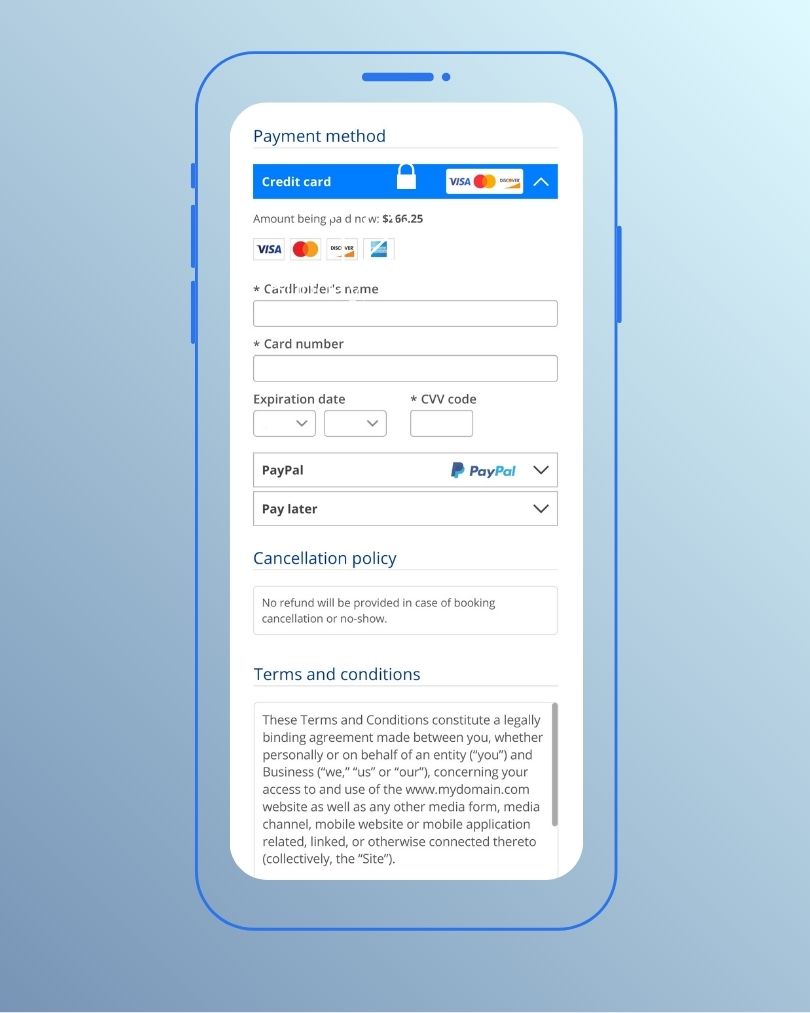
How online booking software streamlines client acquisition
Clients view your available sessions and book instantly 24/7 with online booking. They receive instant email confirmation without any effort from you. Automated reminders reduce no-shows. Calendar integration prevents double bookings. Integrated payment processing allows secure online transactions, and mobile accessibility means clients book from anywhere.
Why Bookeo is the smart choice for fitness professionals
Bookeo simplifies appointment scheduling for individual trainers, small groups, or franchises. The platform handles confirmations, cancelations, and reminders with complete flexibility.

Clients appreciate the easy-to-use booking system for training sessions. The personal training scheduling system integrates with your calendar naturally and stores client information securely for ongoing communication. Bookeo charges no commissions on customer payments and keeps more revenue in your pocket.
What successful personal training marketing actually looks like
Successful personal training marketing strategies don’t require complicated systems. They require consistency in four core areas that work together to fill your schedule.
Building a consistent content presence
Consistency beats perfection every time. Posting one quality piece weekly for a year outperforms daily posts for a month followed by six months of silence. Your audience needs repeated exposure before they trust you enough to become clients.
Block specific hours each week for content creation, social media engagement, and networking. Treat these appointments with the same importance as client sessions. Batch production saves time: record several videos in one session, write multiple posts in a focused block, or photograph a month’s worth of content during one shoot.

Repurpose everything. A single workout video becomes a YouTube upload, Instagram reel, series of images with captions and blog post. This approach reaches people who prefer different formats while you maximize your effort.
Creating a simple referral system that works
Friends trust recommendations from people they know more than advertising. Roughly 84% of consumers trust recommendations from family and friends. Referral programs track client support down to every last referral and give you up-to-the-minute data analysis into growth.
Reward both existing and new clients. Training-related incentives work best and prove affordable. Clients who have been with you longest or train most frequently become your most committed supporters.
Make sharing effortless. Clients should find and share your program in as few clicks as possible. Include clear headlines, advertise incentives, explain the program in three easy steps, and clarify reward rules.
Using email to nurture leads into paying clients
Email delivers $36 for every $1 spent. That return outpaces any other digital marketing channel. A modest list of 200 to 300 people generates leads through well-timed emails that would cost substantially more through paid advertising.
Lead magnets exchange value for email addresses. A 7-day nutrition guide, body composition tracker, or free 15-minute consultation converts because the value feels immediate. Specificity matters: “4-week strength program for busy professionals” converts better than “free fitness guide”.
Welcome sequences run on autopilot the moment someone joins your list. Three to four emails spaced two to three days apart introduce yourself, deliver the lead magnet, share a client result, and make a soft offer. Most conversions happen on email three or four.
Send regular newsletters under 400 words that focus on usefulness rather than impressiveness. Include one training tip, a short client result, a useful link, and a brief reminder of your availability. Consistency matters more than content quality.
Packaging your services for easier decision-making
Packaging services makes buying decisions clearer. Session-based packages offer flexibility through bundles of 5, 10, or 20 sessions with small discounts for bulk purchases. Time-based packages involve monthly or quarterly commitments with fixed sessions per week, perfect for clients who thrive on routine.
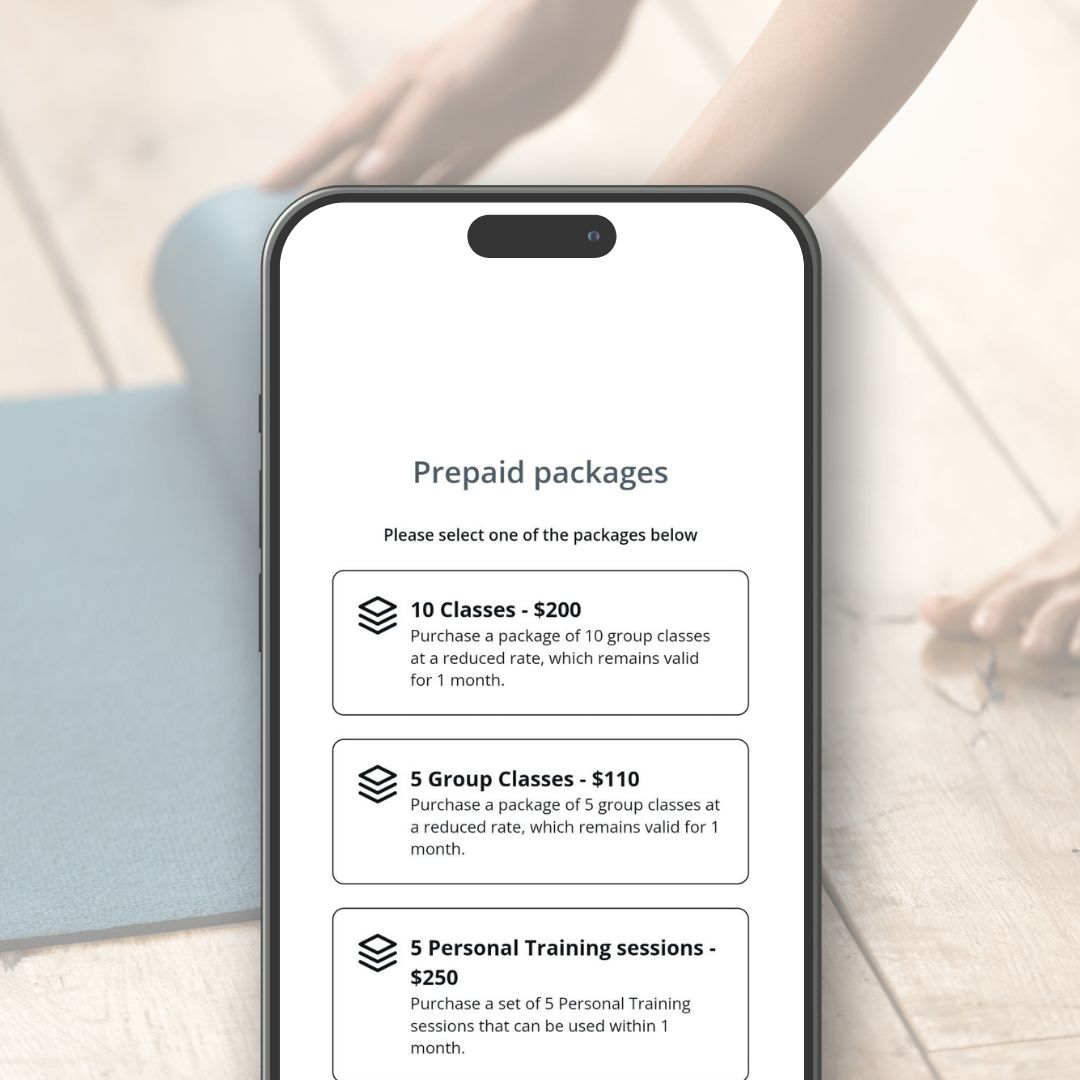
Goal-based packages like “12-Week Body Reboot” attract results-oriented clients motivated by finish lines and measurable progress. Hybrid packages combine personal training with nutrition coaching, fitness assessments, or group classes and justify higher price points.
Present packages in a grid on your website showing differences between options. Explain why pricing is different and how each package works. Clarify what’s included and excluded, particularly time-intensive components like messaging and one-on-one adjustments.
Conclusion
Personal training marketing separates successful trainers from those who quit within two years. Your certification proves technical competence, but clients hire personalities who deliver results. Define your ideal client profile first, then build marketing systems you own. Claim your Google Business Profile and collect testimonials. Make booking frictionless with online scheduling. Consistency beats perfection. Block weekly hours to create content and treat marketing as non-negotiable as client sessions. Bookeo’s class scheduling software handles scheduling and payments with automatic reminders so you can focus on transforming lives instead of chasing payments. Put these strategies into practice and watch your calendar fill.