Dance Studio Marketing: The Ultimate Guide to Attracting Students
Effective dance studio marketing can reshape your enrollment numbers, but where should you focus your efforts? Small businesses like dance studios allocate about 5-8% of their gross revenue to marketing. New studios that want rapid growth might invest 10-12% to boost brand awareness. Here’s an encouraging fact: 80% of your marketing results come from 20% of your efforts. This piece walks you through how to advertise a dance studio. You’ll find proven dance studio marketing strategies, from creating a solid dance studio marketing plan to implementing targeted dance studio marketing ideas that deliver results.
Understanding dance studio marketing
What is dance studio marketing
Marketing for dance studios includes the complete set of activities you use to attract attention, generate interest, and drive enrollment. Your marketing efforts span both online and offline channels. These include social media, referrals, email campaigns, direct mail, and community events. Digital tactics like SEO help you appear in search results when parents type “dance classes near me” or “kids dance studio in [City].” Social media platforms allow you to showcase choreography and class environments. Email marketing delivers messages about new classes and events directly to prospective and current students.

You need to identify your target market first in any marketing approach. Dance studios serve ages from preschoolers to adults, but appealing to everyone dilutes your message. Preschool-aged children (around 2-5 years old) represent an especially valuable demographic. Parents in this group stay motivated to enroll their kids and keep them in classes long-term. A child who starts dancing at age 3 could stay for a decade or more. This creates a lifetime value often exceeding $40,000 per student if they stick with your studio. Beginner dancers of any age form the largest share of the market.
Why marketing matters for dance studios
Your studio faces distinct challenges that make marketing necessary to survive and grow. Dance studios rely on community engagement, personal connections, and visual storytelling to draw customers. You miss opportunities to reach new customers who have just moved to the area or someone wanting to start a new hobby without visibility. Marketing positions your studio ahead of competitors in Google and social media results.
Over half of U.S. teenagers spend at least four hours per day on social media, and parents spend 1-2+ hours on social platforms daily. Your presence on these networks gives you prime opportunities to get noticed by both students and parents. Email marketing proves effective for studios. Education sector emails achieve 28.5% open rates, and wellness/fitness reaches 19.2%. Both outperform the 21.5% cross-industry average. A well-targeted dance studio list can deliver better engagement than most other businesses.
More revenue means more money you can invest back into your business, students, and teachers. The more students your school has, the more opportunities you can afford to offer. These include events, competitions, and additional programs. Marketing isn’t just about attracting new students. It also helps you retain current ones through regular communication and community building.
Key differences between branding and marketing
Branding and marketing serve different but complementary roles. Branding defines who you are, what you stand for, and how people see you. Marketing communicates that value and encourages people to act. Branding builds meaning while marketing distributes that meaning to the right audience.

Your brand includes the identity, tone, values, positioning, and complete experience people associate with your studio. Branding answers what you stand for, who you serve, and how you want to be seen. It has your visual identity, messaging, client experience, content you publish, and how you respond to questions. Branding creates name recognition and feelings of familiarity in consumers. People feel like they know you. That perception determines whether they choose your studio over another.
Marketing represents the tactics and channels you use to get your brand in front of the right audience: SEO, social media, paid ads, email marketing, and content marketing. Marketing answers how you reach ideal clients and move them toward buying. Branding targets long-term reputation, while marketing targets short and medium-term results.
You need branding first. Marketing without branding creates noise. You can drive traffic to a website that doesn’t convert or run ads that get clicks but no questions. Marketing amplifies your brand. If the brand underneath lacks clarity or consistency, marketing just shows that confusion to more people faster. A strong brand makes every marketing investment more effective. Your ads convert better, your content strikes a chord more, and your SEO attracts the right visitors. When branding and marketing work together, every marketing touchpoint reinforces the brand, and the brand makes the marketing more effective.
Building your dance studio marketing plan
Setting clear marketing goals
Your dance studio marketing plan needs a goal that’s crystal clear. Your marketing efforts become haphazard without one. Studios that try to achieve too many goals at once often fail to accomplish any of them. Focus on a single marketing objective to line up all your efforts.
An example marketing goal might involve signing up 80 new members in the next six months. Break this down: just over 13 new monthly members, or about three new members each week. Reverse engineer your marketing to hit this target. Analyze your marketing data to find your historical conversion rate, which reveals how many questions turn into actual sign-ups. Get into how much marketing you need to produce those questions for a baseline.

Do you want 50 new students this season? A 20% increase in summer camp enrollment? Define targets so you can measure which tactics deliver results.
Your marketing budget
Budget planning shapes which dance studio marketing strategies you can pursue. Small businesses put 5-8% of gross revenue into marketing, typically, while new studios that want rapid growth might invest 10-12% to boost brand awareness. Your budget sets the scope and reach of your promotional activities.
Calculate your cost per impression across different channels. Ask every new student how they heard about your studio. This tracking helps you spot which channels provide the best return and deserve more budget allocation.
Your target audience
Market segments for dance studios include children aged 3-12, teens and adolescents, adults seeking fitness or social dance, aspiring dancers aged 16-25, and senior citizens. You may cater to two or three segments, but should establish a primary focus.
Create a customer persona afterward. This detailed fictional representation of your ideal customer stems from market research. Include demographic information, interests, motivations, and challenges. Taking time to develop a customer persona humanizes prospective customers and allows you to craft marketing messages that meet them where they are.
Preschool programs targeting ages 2-5 offer a built-in retention advantage. A child starting at age 3 could stay for a decade or more and create a lifetime value often exceeding $40,000 per student. One small studio in Connecticut welcomed its strength, teaching young beginners and branded itself as the go-to studio for little ones. This focus led to enrollment explosion and forced expansion by 5,000 square feet. The studio grew to over 450 students in a town of only 17,000 residents.
Market what you do best to the people who value it most. Whether your niche involves preschool dance, recreational teen classes, or adult fitness dance, tailor your strategy to attract those core customers.

Define your studio’s value proposition. You might excel at nurturing young dancers, offering a family-friendly atmosphere, or providing specialty options like specific dance styles or flexible class schedules. What sets you apart guides your marketing messaging when you clarify it.
Figure out what your audience values most. Professional instructors, a sense of community, and diverse dance styles are the foundations for your key marketing message.
The right marketing channels
The 80/20 principle states that 80% of outputs come from 20% of inputs. Applied to marketing: 80% of your results come from 20% of your efforts. Studios that spot and focus on those high-impact activities work less, attract more students, and make more money.
Two main channels have proven to be staples for studios: SEO and Facebook Ads. SEO brings people who search for dance classes actively, while Facebook Ads reach those who fit your target demographic but aren’t looking yet. Both groups might take you up on a good offer to try your studio.
Your online marketing should center around your business website. Facebook, Instagram, YouTube, and TikTok posts should direct viewers to the website to learn more and sign up for lead generation offers.

Facebook ads offer precise control. You decide when to turn them on or off. Social media ads provide the perfect way to fill classes and increase enrollment quickly for new studios. Detailed targeting possibilities let you show up in front of people near your location.
Invest in a range of marketing channels to reach your target audience enough times that they become interested without feeling overwhelmed. Think about social media, local radio or TV ads, direct mail appeals, and flyers to connect with prospective students.
Digital marketing strategies for dance studios
Digital channels are the foundations where most prospective students find and review dance studios. Your online presence determines whether families choose you or scroll past to a competitor.
Social media marketing
Engagement matters more than follower counts. Likes, shares, comments, and direct messages matter more than vanity metrics. Posting 2-3 times per week with the intention of delivering better results than daily posts without a strategy.
The STEP method helps you craft content that stops the scroll. Show your values by highlighting your studio’s mission and culture through photos, short videos, or carousels. Teach something by breaking down simple dance tips, parenting advice for dance families, or answering frequently asked questions about your programs. Engage intentionally by responding to comments, tagging dancers in stories, and using interactive features like polls or questions. Promote with purpose using clear calls to action that show the transformation students will gain.
Short-form video continues to dominate platforms. Use Reels, TikToks, and YouTube Shorts to give sneak peeks of class, show recital prep behind the scenes, introduce your team, or highlight dancer growth. Keep videos under 30 seconds when possible and use captions. Don’t stress about perfect editing. Authentic content wins.
Ask your parents and dancers where they spend time online, then focus your energy there. Instagram and Facebook remain necessary for most studios, with TikTok gaining traction for teen engagement.
Search engine optimization (SEO)
Search engine optimization ranks as the number one idea from surveyed dance studios for growing enrollment. SEO improves your website’s ranking on search engine results pages. 71% of clicks on Google search results occur on the first page, so you need your website content in the top ten results for keyword searches related to your business.

Put yourself in prospective customers’ shoes. Parents of a seven-year-old wanting dance classes would probably type phrases like “dance studios for kids” or “dance studios in [your city]”. Create a Google My Business Profile to appear in local listings and on Google Maps.
Local SEO acts as a secret weapon for standing out in your community. Claim your Google My Business listing and keep your profile updated with high-quality photos, accurate business hours, and timely responses to reviews. Embed Google Maps on your contact page. Optimize for “near me” searches by including phrases like “near me” or “in [your city]” in your site’s content and meta tags.
Use tools like SEMrush or Google Keyword Planner to find relevant keywords, including long-tail keywords specific to your services. Incorporate keywords into blog posts, class descriptions, and instructor bios while keeping content engaging.
Email marketing campaigns
Email marketing has always been the most effective strategy to increase revenue for many studio owners. Dance studio emails achieve a 41.8% open rate, substantially higher than the 36.5% average for email marketing campaigns.
Segment your list into current active students, past students, and leads. Current students represent your best buyers because they already like and trust you. Offer them private lesson discounts, early workshop prices, or merchandise sales monthly. Send monthly emails to past students inviting them back with waived registration fees or free trial classes. Use strong offers like a 1-week free class pass for leads who haven’t earned your trust yet.
Personalization creates relationships within your studio community. Use placeholders that pull in specific information like the recipient’s name, enrolled classes, or upcoming events they might be interested in.
Write captivating, curiosity-driven subject lines. Most people don’t open emails, so your subject line should get people wondering what your email contains.
Pay-per-click advertising
Pay-per-click advertising allows you to reach qualified leads actively searching for dance schools. You only pay when someone clicks on your ad, meaning your budget goes exclusively to leads that participate in your campaign.
PPC helps you reach a highly targeted audience using criteria such as demographics, interests, hobbies, or socioeconomic status. Platforms like Google Ads display your ads only to people meeting these criteria. You can customize ad content, schedule ads to run during specific hours when your audience is most likely online, choose campaign duration, and decide how much to spend based on your studio’s resources.
Monitor key metrics like impressions, clickthrough rate, and conversions through a user-friendly dashboard. This information helps you identify which campaign elements work well and which need adjustment.
Your professional website
Your website serves as the digital front door to your studio. Dance studio website projects typically have a 2-6 week timeline from kick-off call to launch. WordPress and Squarespace represent the most common platforms for dance studio websites.
Mobile responsiveness is critical since the majority of searches happen on mobile devices. Your website must have a clear, easy-to-navigate layout with prominent calls-to-action that urge visitors to sign up for classes or contact the studio. Fast-loading pages improve user experience and SEO rankings.
Most dance studio software integrations are possible, allowing you to connect your website with your class management system. Most web design clients see an increase in inquiries and online registrations quickly after launch.
Traditional dance studio marketing ideas
Physical marketing materials still deliver measurable results for dance studio marketing. Digital dominates, but offline tactics reach audiences in ways online ads cannot.
Direct mail and postcards
Direct mail inspires action across multiple channels. 57% of consumers visit the brand’s website after receiving direct mail from a business, 53% search for that brand online, and 46% search for online reviews about the business. These numbers show how physical mail drives digital participation.
Direct mail connects with customers on a personal level. Consumers appreciate mailings that include their preferred name and speak to them on a deeper level. Share a story of one of your current students and how your studio affected them. They may have faced challenges but persevered and won a major competition with help from your instructors. Personal stories move readers and capture prospective students’ attention.
People spend countless hours on phones consuming advertisements. Physical postcards focus your audience’s attention on your message for a moment and improve the chances they’ll remember your business. Pick a specific event to promote rather than sending general materials. Summer workshops, seasonal recitals, open houses, registration periods, tuition discounts, guest speakers, or new class schedules work well for postcard campaigns.
Design matters. Use eye-catching graphics like photos from your studio, whether adorable dancer groups or impressive action shots. A short statement about your event belongs on the front, with detailed text saved for the back. Add contact information, website, and event details with language that encourages readers to act soon.
Flyers and posters
Flyers cost very little since you only need a computer, printer, and ink. Print shops and office supply stores offer higher-quality materials for a fee. Your studio name and logo, tagline, brief class overview, upcoming schedule, address, and contact information, like email, phone number, and social media handles, should all be included.
Post flyers on public bulletin boards with the owner’s permission. Popular locations include public parks, grocery stores, coffee shops, gyms, restaurants, libraries, bus stops, community centers, and street posts. Hand flyers to current students so they can distribute them to friends and put information directly in front of your target audience.
Local sponsorships and partnerships
Sponsorships accomplish several goals at once. You get your business logo on banners, t-shirts, and marketing materials by sponsoring local groups like youth sports teams or events like charity 5Ks. This introduces your studio to community members unfamiliar with your offerings.

Event booths let you connect with prospective students and network with other local business owners. Share advice and display each other’s flyers at respective businesses. Research shows consumers are more willing to do business with establishments that participate in charitable efforts to improve society. Sponsorships position your studio as a community supporter while boosting your PR image.
Community events and open houses
Accessibility in your community attracts more dancers. Host open houses and events free of charge or for a small fee. Advertise on as many free platforms as possible. A Q&A session can answer pressing questions. Dancers should leave educated about your studio and excited to join.
Showcase your dancers’ talents by preparing a piece for the event to entice new members. Other event ideas include choreography workshops, dance showcases, family dance days, or dance-centric fundraisers. Your studio should feel like a welcoming community hub.
Customer acquisition tactics
Converting interested prospects into paying students requires specific tactics that lower barriers to entry and incentivize action. These customer acquisition methods deliver measurable enrollment growth when implemented the right way.
Offering free trial classes
Free trial classes remove financial risk for hesitant families. Studios offer these introductory sessions to new students only. Prospects experience your teaching style and class environment before committing. The trial helps families determine if your studio’s style and class offerings fit their needs.
Trials require minimal effort to set up. Create an online form where prospects register, then redirect them to your booking page to schedule their session. Make the process frictionless since you want maximum trial attendance. Free trials don’t guarantee enrollment in that specific class, so communicate that only actual registration secures a permanent spot.
Running limited-time promotions
Time-sensitive offers create urgency that propels enrollment decisions. Flash sales on summer programs generate quick responses when you set clear deadlines. Studios discount summer intensives by USD 25.00 for ages 4-18, theater camps by USD 50.00-USD 100.00 for ages 5-13, and specialty workshops by USD 15.00-USD 20.00 when families enroll during promotional windows.

Bundle multiple workshops together and offer combined discounts. Three workshop bundles for ages 3-5 priced at USD 20.00 off encourage families to commit to multiple sessions. Technical intensives for advanced dancers aged 11-17 discounted by USD 25.00 attract serious students. Promote these offers across marketing channels of all types with countdown timers to maximize conversions.
Creating referral programs
Word-of-mouth recommendations drive 65% of all new business. Referred customers stay 18% more enrolled than other students. A referral program costs 5-7 times less to build than acquiring customers through traditional marketing methods.
Structure rewards to benefit both parties. The referring student earns credits or discounts while the new student receives an introductory offer. Award USD 5.00 monthly credit per referral up to USD 50.00 limits when the new student stays enrolled for 10 months. Provide tiered rewards as an alternative: 15% lesson discount for one student enrolled in multiple weekly classes, or 30% discount for two students in multiple classes.
Track referrals through registration forms that ask “How did you hear about our studio?”. Add referral fields to your online enrollment system for accurate attribution.
Hosting showcase events
Recruitment showcases connect dancers with opportunities beyond your studio while raising your profile. Events like TRIBE 99’s dance combine have operated since 2017 and connect dance prospects with college team programs at the national and regional level. Studios can host smaller-scale showcases featuring Friday evening kickoffs and Sunday afternoon sessions where dancers work with staff in intimate settings.
These events demonstrate your dancers’ abilities to prospective students while building community excitement around your program.
Retention and loyalty strategies
Retention costs nine times less than new student acquisition. Student lifetime value can reach about USD 2,620.00 when you account for monthly tuition and special programs over four years. You protect this revenue when you keep current families and create opportunities for sibling enrollment and word-of-mouth growth.
Regular communication with families
Greet everyone who enters your studio, even when you’re busy. This small gesture shows you care and makes families feel like a priority. Communicate often through email, text, social media, and any other convenient means. Most problems stem from miscommunication, especially with upset customers.

Standardize your communication channels. Use email for detailed information like costume requirements or recital schedules. Push notifications or SMS work better for urgent messages like weather closures. Updates on a consistent schedule, such as every Monday morning, help families anticipate information and reduce anxiety.
Appreciation programs for current students
Send thank you emails whenever families purchase merchandise or event tickets. A simple thank you goes a long way to build loyalty and satisfaction. Organize customer appreciation events once a semester, ideally in October and February, to show gratitude for continued support.
Loyalty program members purchase 38% more classes and spend 27-34% more on costumes and special programs. Digital loyalty programs achieve 79% active user rates compared to just 12% for traditional physical cards.
Creating studio events that engage
Host Parents’ Night Out on Friday evenings. Parents drop off kids at the studio for games, dancing, and pizza. Parents get time off, kids have fun, and your studio earns extra income. Birthday acknowledgments with social media shoutouts, bulletin board displays, or cards sent home create memorable moments.
Gathering and implementing feedback
Ask for feedback through anonymous surveys or questionnaires after big events. Students and parents stay enrolled when they see their opinions matter.

Listen to complaints as if they’re coming from your best friend. Be empathetic, confirm the complaint’s validity and figure out solutions that suit both sides.
Using technology for marketing success
Benefits of online booking software
Online booking systems transform how prospective students interact with your studio. Families view availability up to the minute and book classes anytime, anywhere, on any device. This convenience matters when parents juggle work schedules and need flexibility. Students can register at 11 PM after discussing options with family members rather than waiting for business hours. Online registration eliminates phone tag and reduces administrative workload for your staff.
How Bookeo streamlines dance studio operations
Bookeo’s dance studio scheduling software offers a 30-day free trial without requiring a credit card. You add your business details, dance classes, and private lessons, then set class descriptions and upload images and videos that showcase them. The platform provides a customizable booking page, or you can add the Bookeo widget on your website so students book classes without overlays or popups.
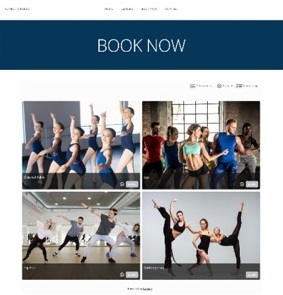
Customize colors and styles to match your logo and website, selecting from gorgeous booking page layout templates for a professionally branded experience. Integrate supported payment gateways to accept online payments. Bookeo’s online booking system takes bookings 24/7.
Automating marketing communications
Automation expands your reach while reducing manual effort. Social media post scheduling lets you create a monthly content calendar upfront, then schedule posts in advance. Chatbots on your website answer frequently asked questions about enrollment periods and age-appropriate classes. Automated direct message replies engage users on social platforms immediately. Retargeting ads follow parents who visited your registration page but didn’t complete signup.
Tracking marketing performance
Analytics reveal invisible patterns in your marketing efforts. Track enrollment metrics like new registrations, retention rates, and dropouts to understand where your studio stands. Monitor revenue streams from memberships, events, and workshops through detailed financial reporting. Act on this data rather than simply collecting it.
Measuring your marketing effectiveness
Key metrics to track
Your studio’s appeal and student loyalty show up in total enrollments. New student registrations test how well your marketing strategies work and whether your team knows how to convert interest. High dropout rates signal problems with satisfaction or engagement, so cancelations need close attention. Tuition revenue represents your financial stability and helps you spot when funds might be trickling away. Student retention rates, average class size, and marketing cost per new student provide direct views into operational efficiency.
Using lead management tools
Lead management software tracks which sources bring the most conversions. You can measure sign-ups, conversions and campaign performance through clear metrics. The software organizes all lead sources in one place and monitors leads so you spot aging contacts before interest drops. It sends emails and texts based on the pipeline stage.
Calculating return on investment
ROI calculation starts simply. Subtract your marketing investment from gross profit and divide by the marketing investment. Your ROI equals USD 4.00 if gross profit reaches USD 5,000.00 and marketing costs USD 1,000.00. Customer acquisition cost divides total marketing spend by the new students acquired. Businesses make an average of USD 2.00 in revenue for every USD 1.00 spent on Google Ads.
Adjusting strategies based on data
One studio monitored Facebook ad performance and found conversions weren’t meeting expectations despite deep impressions. A budget shift to Google ads increased impressions by 96%, clicks by 53%, and conversions by 43%. Move budgets toward channels that bring the highest returns.
Conclusion
Successful dance studio marketing boils down to focus and consistency. You don’t need to become skilled at every strategy at once. Identify the 20% of efforts delivering 80% of results and double down on those channels. Start with a clear enrollment goal and track what actually converts prospects into students.
Retention matters just as much as acquisition. Keep current families participating through regular communication and appreciation programs. Technology like Bookeo’s class scheduling software eliminates administrative friction. Families can book classes anytime while you focus on teaching. Measure your ROI, adjust based on data and watch your enrollment grow.